US Iran War Tensions Surge: Critical Risks as $8 Billion Arms Deal Sparks Global Alarm

A woman walks past an anti-U.S. billboard depicting U.S. President Donald Trump and the Strait of Hormuz, in Tehran, Iran, May 2, 2026. Majid Asgaripour/WANA (West Asia News Agency) via REUTERS Purchase Licensing Rights
US Iran War Tensions rise sharply as the US fast-tracks an $8 billion arms deal, Iran threatens Strait of Hormuz restrictions, and fears of renewed conflict grow across the Middle East.
Introduction to US Iran War Tensions
US Iran War Tensions are escalating rapidly, raising global concerns about a possible renewed conflict in the Middle East. Recent developments, including a massive US arms deal and Iran’s strong military warnings, have pushed diplomacy into a fragile state.
The situation reflects a dangerous shift from negotiation to confrontation, with both sides signaling readiness for escalation rather than compromise.
Why US Iran War Tensions Are Rising Again
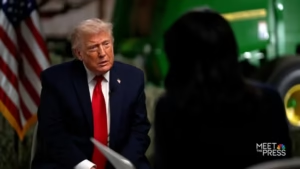
The current wave of US Iran War Tensions stems from stalled negotiations and growing mistrust. Former US President Donald Trump rejected Iran’s latest proposal, stating it included demands that were unacceptable.
Iran, in response, has warned that renewed conflict is “likely,” emphasizing its preparedness for any military action. This exchange has significantly weakened already fragile diplomatic efforts.
$8 Billion Arms Deal and Its Impact
The United States has accelerated an $8 billion arms sale to Middle Eastern allies, a move that has intensified US Iran War Tensions.
Key Impacts:
- Strengthens US allies militarily
- Signals preparedness for potential conflict
- Escalates regional arms race
Experts argue this decision may reduce the chances of peaceful negotiations while increasing the risk of miscalculation.
Strait of Hormuz Crisis Explained
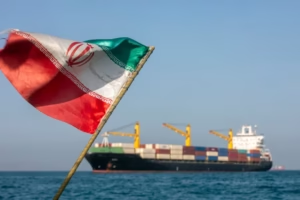
A major flashpoint in US Iran War Tensions is the Strait of Hormuz, one of the world’s most critical oil shipping routes.
Iran’s Proposed Restrictions:
- Ban Israeli vessels
- Charge fees to “hostile nations”
- Require permits for passage
Such measures could disrupt global oil supply chains, impacting economies worldwide.
Iran’s Military Warning and Preparedness
Iran’s military leadership has issued strong statements amid rising US Iran War Tensions, claiming they are fully prepared for any confrontation.
This includes:
- Defensive readiness
- Strategic naval positioning
- Potential retaliation plans
These warnings increase the likelihood of escalation if diplomatic channels remain stalled.
Public Opinion in the United States
A recent poll shows that 61% of Americans believe military action against Iran was a mistake, highlighting internal divisions over foreign policy.
Public sentiment plays a critical role in shaping future decisions, especially in democratic systems where leadership is influenced by voter opinion.
Role of Israel and Lebanon Conflict
The ongoing clashes between Israel and Hezbollah in Lebanon are further fueling US Iran War Tensions.
Despite a ceasefire:
- Cross-border strikes continue
- Regional instability increases
- Proxy conflict risks rise
Iran’s support for Hezbollah adds another layer of complexity to the crisis.
Diplomatic Breakdown Between US and Iran
Diplomacy remains fragile as both sides hold firm positions:
- The US demands strict nuclear restrictions
- Iran seeks sanctions relief and economic access
This deadlock has stalled progress and contributed to rising US Iran War Tensions.
Global Economic and Security Implications
Escalating US Iran War Tensions could have far-reaching consequences:
Economic Risks:
- Oil price spikes
- Supply chain disruptions
- Market instability
Security Risks:
- Regional war expansion
- Increased terrorism threats
- Global military involvement
The Strait of Hormuz alone handles a significant portion of global oil trade, making it a critical نقطة of concern.
What Happens Next?
The future of US Iran War Tensions depends on several factors:
- Will diplomacy resume?
- Will military action be avoided?
- Can global powers intervene effectively?
Without immediate de-escalation, the region could move closer to open conflict.
Conclusion
US Iran War Tensions are at a critical point, with diplomacy weakening and military signals strengthening. The combination of arms deals, strategic threats, and stalled negotiations has created a volatile environment.
Without renewed diplomatic efforts, the risk of conflict remains dangerously high, making this one of the most closely watched geopolitical crises in the world today.
External Resource (DoFollow):
Follow further at CNN: https://edition.cnn.com/2026/05/02/world/live-news/iran-war-news
For more on Reuters: https://www.reuters.com/world/asia-pacific/iran-offers-strait-deal-trump-dissatisfied-prefers-non-military-path-2026-05-02/