US-China Summit 2026 Reveals Shocking Taiwan Talks and Iran Strategy
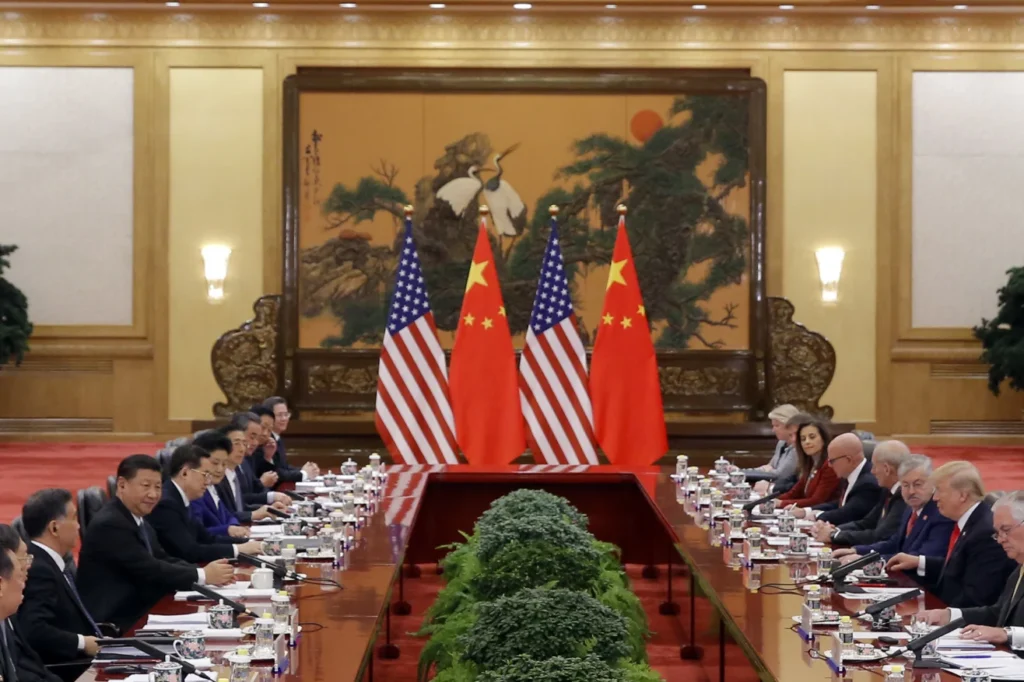
US President Donald Trump, third right, and Chinese leader Xi Jinping, sixth left, hold a bilateral meeting at the Great Hall of the People in Beijing on November 9, 2017. Thomas Peter/AP
US-China Summit 2026 highlights Trump and Xi discussions on Taiwan arms sales, Iran war, and trade deals. Explore key outcomes, tensions, and global impact.
US-China Summit 2026: Trump and Xi Discuss Taiwan, Iran, and Trade
The US-China Summit 2026 marked a significant moment in global diplomacy, as Donald Trump and Xi Jinping met in Beijing to address some of the world’s most pressing geopolitical challenges. From Taiwan tensions to the Iran conflict and evolving trade relations, the summit reflected both cooperation and deep-rooted rivalry.
Overview of US-China Summit 2026
The US-China Summit 2026 concluded without major formal agreements, yet both sides described the discussions as constructive. The meeting symbolized a temporary stabilization in relations between the two global powers.
President Trump emphasized that “many problems were settled,” though no detailed agreements were disclosed. Meanwhile, China’s Foreign Ministry labeled the summit as “historic,” highlighting diplomatic progress despite unresolved tensions.
US-China Summit 2026 and Taiwan Arms Debate
The US-China Summit 2026 placed Taiwan at the forefront of discussions. Xi Jinping warned that mishandling Taiwan could push both nations toward conflict. Trump, however, maintained a cautious stance, stating he had made “no commitment” regarding arms sales.
The United States continues to support Taiwan’s defense under longstanding policies, while officially recognizing the “One China” framework.
Trump’s Warning on Taiwan Independence
Trump cautioned Taiwan against declaring independence, reinforcing the US position of maintaining the status quo. This reflects decades of delicate diplomacy balancing US support for Taiwan and relations with China.
US-China Summit 2026 Focus on Iran Conflict
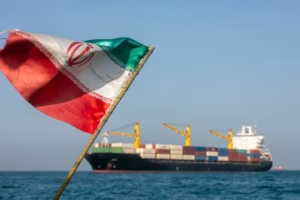
Another major highlight of the US-China Summit 2026 was the ongoing Iran conflict. Both leaders agreed that Iran should not develop nuclear weapons and emphasized reopening the Strait of Hormuz.
Despite this shared stance, Trump clarified that the US was not seeking direct assistance from China regarding Iran negotiations.
Ceasefire Developments
During the summit period, diplomatic efforts led to a temporary extension of a ceasefire between Israel and Lebanon, signaling cautious progress in regional stability.
Economic Highlights of US-China Summit 2026
Trump touted “fantastic trade deals,” including a potential agreement for China to purchase 200 aircraft from Boeing. Additional discussions included increased Chinese imports of US oil and agricultural products.
However, analysts noted that these announcements lacked detailed confirmation, leaving uncertainty around their implementation.
Technology and Tariffs
Beyond trade, both nations addressed technology competition and tariffs—key elements shaping modern economic rivalry.
The New “Four Ts” in US-China Relations
Evolution of Strategic Priorities
Historically, US-China tensions revolved around:
- Tiananmen
- Tibet
- Taiwan
Today, the US-China Summit 2026 reflects a shift toward:
- Tariffs
- Technology
- Taiwan
- Tehran (Iran)
This evolution highlights how economic and technological competition now dominates the bilateral relationship.
Strategic Takeaways from US-China Summit 2026
1. Stabilization Without Resolution
The summit reduced immediate tensions but failed to resolve core disputes.
2. Taiwan Remains the Most Sensitive Issue
Both sides signaled caution, yet risks remain high.
3. Iran Adds Global Complexity
The inclusion of Iran discussions underscores expanding geopolitical overlap.
4. Economic Cooperation Continues
Despite rivalry, trade remains a shared interest.
Global Impact and Future Outlook
The US-China Summit 2026 demonstrates a complex relationship defined by cooperation and competition. While no groundbreaking agreements emerged, the dialogue itself helped prevent escalation.
Xi Jinping is expected to visit the United States later, suggesting continued diplomatic engagement. Meanwhile, global observers remain focused on how both nations will manage tensions around Taiwan, trade, and security.
Conclusion
The US-China Summit 2026 may not have produced concrete agreements, but it played a crucial role in maintaining dialogue between two global superpowers. With Taiwan tensions, Iran conflict, and economic rivalry shaping the future, the world will closely watch the next phase of US-China relations.
Explore more at CNN: https://edition.cnn.com/2026/05/15/politics/takeaways-trump-china-visit-xi-intl-hnk?iid=cnn_buildContentRecirc_end_recirc&recs_exp=up-next-article-end&tenant_id=related.en
Further read via Al Jazeera: https://www.aljazeera.com/news/2026/5/15/trump-departs-china-touting-deals-but-little-clarity-on-iran-or-taiwan