US Iran Peace Deal 2026: Powerful Updates on Trump’s Strategy & Strait of Hormuz Breakthrough
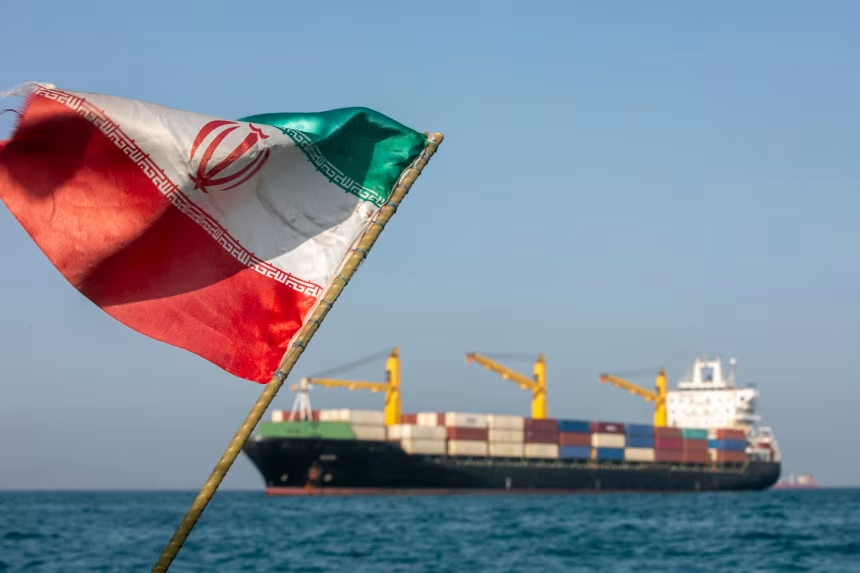
Ships remain anchored in the Strait of Hormuz on May 16. Majid Saeedi/Getty Images
US Iran Peace Deal 2026 is nearing completion as Donald Trump urges patience. Explore key updates on the Strait of Hormuz, sanctions, ceasefire, and nuclear negotiations.
US Iran Peace Deal 2026: A New Phase in Global Diplomacy
The US Iran Peace Deal 2026 is emerging as a critical geopolitical development, signaling a possible end to weeks of intense conflict between the United States and Iran. Both nations are working toward a memorandum of understanding (MoU) that could transform a fragile ceasefire into a long-term peace framework.
At the center of this negotiation is Donald Trump, who has instructed negotiators to proceed carefully rather than rushing into a premature agreement.
Trump’s Strategy: “Take Your Time”
The US Iran Peace Deal 2026 gained attention after Trump publicly stated that negotiators should “not rush into a deal.”
This approach reflects:
- A desire for a comprehensive agreement
- Avoidance of short-term political fixes
- Focus on long-term regional stability
Trump confirmed that talks are “constructive,” but emphasized that both sides must “get it right.”
Strait of Hormuz: The Heart of the US Iran Peace Deal 2026
One of the most crucial elements of the US Iran Peace Deal 2026 is the reopening of the Strait of Hormuz.
Why it matters:
- Handles ~20% of global oil shipments
- Key route for Middle East exports
- Closure disrupted global energy markets
Current Proposal:
- Iran allows shipping to return to pre-war levels within 30 days
- Waterway remains under Iranian supervision
- Coordination required for safe passage
However, Iran insists that reopening does not mean loss of control, signaling a shift in regional power dynamics.
What’s Inside the Memorandum of Understanding?
The US Iran Peace Deal 2026 revolves around a structured roadmap:
Key Components:
- 60-day ceasefire extension
- Gradual reopening of shipping routes
- Conditional sanctions relief on oil exports
- 60-day timeline for nuclear negotiations
- Framework for resolving all disputes
While largely negotiated, the agreement still has unresolved issues, delaying final signing.
🇮🇷 Iran’s Position on the US Iran Peace Deal 2026
Iranian officials acknowledge progress but challenge several US claims.
Key Points from Iran:
- Strait of Hormuz remains under Iranian authority
- Sanctions must be lifted simultaneously
- No commitments yet on nuclear rollback
Iranian outlets stress that:
Reopening shipping does not mean surrendering control.
This highlights Iran’s effort to maintain strategic leverage while engaging diplomatically.
Regional Players in the US Iran Peace Deal 2026
The agreement involves multiple countries, including:
- Saudi Arabia
- United Arab Emirates
- Qatar
- Pakistan
- Turkey
- Egypt
These nations play roles in:
- Mediation
- Security guarantees
- Economic cooperation
Their involvement strengthens the legitimacy of the US Iran Peace Deal 2026.
Political Reactions in the United States
The deal has sparked debate in Washington:
- Some Republicans argue it is too lenient
- Others fear it could undermine military gains
Notable criticism:
- Concerns over Iran’s nuclear ambitions
- Skepticism about ceasefire effectiveness
This internal division may influence how the US Iran Peace Deal 2026 evolves.
Global Economic Impact
If finalized, the US Iran Peace Deal 2026 could:
- Stabilize global oil prices
- Restore supply chains
- Boost investor confidence
Energy markets are already reacting to the possibility of:
- Increased oil supply
- Reduced geopolitical risk
What Happens Next?
The US Iran Peace Deal 2026 is close—but not final.
Remaining Challenges:
- Final agreement on sanctions
- Consensus on nuclear program limits
- Agreement on Hormuz control terms
A breakthrough could happen soon—but only if both sides resolve the last sticking points.
Conclusion
The US Iran Peace Deal 2026 represents a critical turning point in international diplomacy. With the potential to reshape Middle East stability, global energy markets, and US foreign policy, the stakes are incredibly high.
While progress is evident, Trump’s cautious approach suggests that precision matters more than speed. Whether this deal succeeds will depend on how both nations balance power, trust, and long-term strategy.
External (DoFollow):
Explore more on CNN: https://edition.cnn.com/2026/05/24/middleeast/iran-us-proposed-deal-wwk-intl
Search further at BBC: https://www.bbc.com/news/articles/clyp0040x7po