Breaking Update: Trump Iran Attack Called Off – Powerful Delay Signals Hope for Deal in 2026
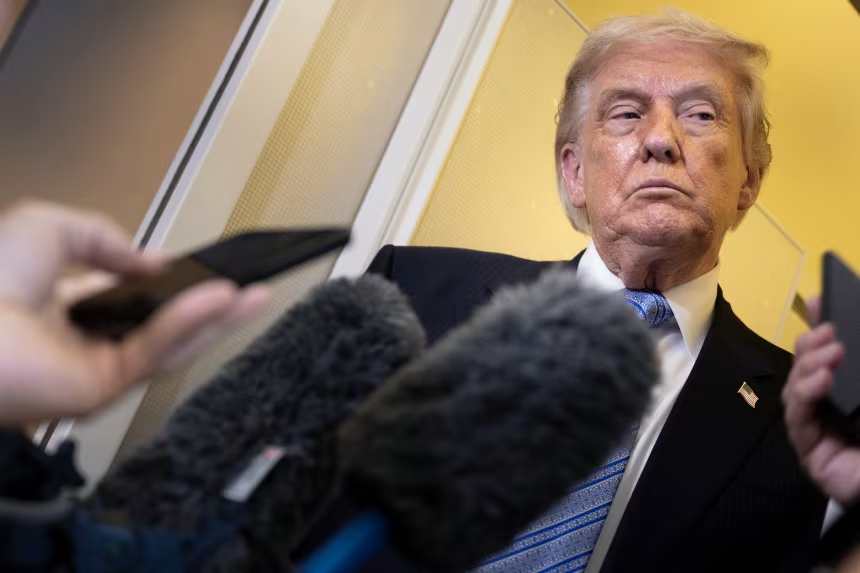
President Donald Trump speaks to reporters aboard Air Force One after his departure from Beijing Capital Airport on May 15, on his way back to the United States. Brendan Smialowski/AFP/Getty Images
Trump Iran attack called off as Gulf leaders push for urgent diplomacy. Discover why the U.S. paused military action and what it means for global security.
Introduction
Trump Iran attack called off marks a dramatic shift in escalating Middle East tensions, as former U.S. President Donald Trump announced a last-minute pause on a planned military strike against Iran. The decision came after urgent appeals from Gulf leaders, signaling a potential diplomatic breakthrough amid rising fears of a full-scale war.
Why the Trump Iran Attack Was Called Off
The Trump Iran attack called off decision followed direct requests from key regional allies. According to Trump, leaders from Qatar, Saudi Arabia, and the UAE urged restraint as negotiations with Iran gained momentum.
Among those involved were:
- Tamim bin Hamad Al Thani
- Mohammed bin Salman
- Mohamed bin Zayed Al Nahyan
Trump emphasized that these leaders believed a deal could be reached that would ensure “NO NUCLEAR WEAPONS FOR IRAN.”
Gulf Leaders’ Role in De-escalation
The Trump Iran attack called off move highlights the growing diplomatic influence of Gulf nations. Their intervention reflects both regional security concerns and economic risks tied to war.
These leaders acted quickly because:
- War could destabilize the entire Middle East
- Oil routes like the Strait of Hormuz were at risk
- Economic fallout would impact global markets
Their coordinated approach suggests a shift toward regional diplomacy rather than reliance solely on Western intervention.
Nuclear Deal Tensions and Red Lines
Despite the Trump Iran attack called off announcement, major disagreements remain unresolved—especially around nuclear enrichment.
The U.S. has set strict conditions:
- Iran must halt uranium enrichment
- Iran must surrender near-weapons-grade stockpiles
White House officials reiterated that these are non-negotiable “red lines.”
Iran, however, has resisted these demands, calling its proposals “responsible” and “generous.” This deadlock continues to threaten long-term peace.
Impact on Global Oil and Economy
The Trump Iran attack called off decision also ties directly to global economic stability.
Key developments include:
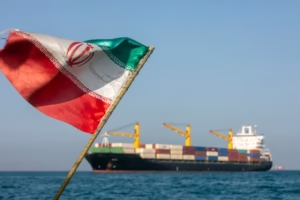
- Iran tightening control over the Strait of Hormuz
- Around 20% of global oil supply affected
- Oil prices surging worldwide
Economic experts warn that prolonged tensions could trigger inflation and disrupt energy markets globally.
Military Readiness and Strategic Pressure
Even though the Trump Iran attack called off, Trump made it clear that military options remain active.
He ordered U.S. forces to:
- Stay fully prepared
- Be ready for a “large-scale assault on a moment’s notice”
This dual strategy—diplomacy backed by force—keeps pressure on Iran while leaving room for negotiation.
Regional Conflict Expands: Lebanon, Gaza & Iraq
The Trump Iran attack called off comes amid a wider regional crisis:
- Israeli strikes in Lebanon have reportedly killed over 3,000 people
- Naval blockades continue near Gaza
- Iraq is investigating drone attacks linked to regional tensions
What Happens Next?
The future after the Trump Iran attack called off depends on several factors:
1. Negotiation Progress
If talks succeed, a historic nuclear deal could reshape Middle East politics.
2. Iran’s Response
Tehran’s willingness to compromise remains uncertain.
3. U.S. Political Pressure
Domestic concerns, including rising fuel prices and approval ratings, may influence decisions.
4. Regional Stability
Any escalation could quickly reverse diplomatic gains.
Conclusion
The Trump Iran attack called off decision represents a critical turning point in 2026’s most dangerous geopolitical crisis. While it offers a window for diplomacy, the situation remains fragile.
The balance between negotiation and military readiness defines the current strategy. Whether this leads to peace or renewed conflict depends on the next steps taken by Washington, Tehran, and regional powers.
For now, the world watches closely—because the next move could reshape global security.
External Sources (DoFollow):
Read more at CNN: https://edition.cnn.com/2026/05/18/politics/trump-iran-resumed-attack-plans
Explore Middle East updates via BBC: https://www.bbc.com/news/articles/c7079e55zjro