Trump Threatens Iran Strikes: Powerful Developments in US-Iran Peace Talks
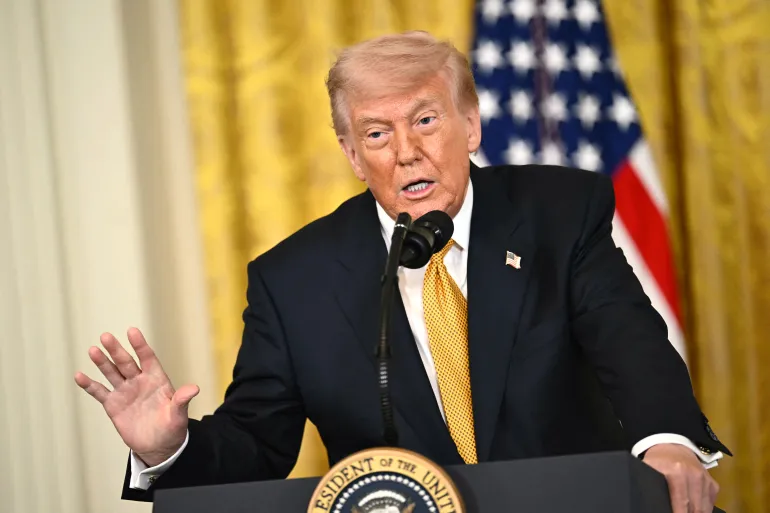
US President Donald Trump speaks during a 'Military Mother's Day' event on May 6, 2026 at the White House in Washington, DC, the United States [Kent Nishimura/AFP]
Trump threatens Iran strikes as US-Iran peace talks show major progress. President Donald Trump warned of higher-level military attacks if Tehran rejects a deal while negotiations continue through Pakistan mediation.
Trump Threatens Iran Strikes Amid Fragile Peace Talks
Trump threatens Iran strikes while also signaling optimism about ongoing diplomatic negotiations between the United States and Iran. President Donald Trump said the US has held “very good talks” with Iranian officials during the past 24 hours, raising hopes for a possible agreement to end rising tensions in the Middle East.
At the same time, Trump warned Tehran that the US could launch a “much higher level” military response if Iran refuses to accept a peace deal. The mixed messaging highlights the delicate balance between diplomacy and military pressure as both nations attempt to avoid a broader regional conflict.
A regional source told CNN that both sides are moving closer toward drafting a memorandum aimed at ending the current crisis. Pakistan is reportedly playing a central mediation role between Washington and Tehran.
Trump Threatens Iran Strikes During Negotiations
President Donald Trump delivered one of his strongest warnings yet to Iran, saying the United States is prepared for “higher level” military strikes if Tehran refuses to move forward with a peace agreement.
The statement came shortly after Trump announced a temporary pause in the US military’s “Project Freedom” mission. The operation was designed to secure safe passage for commercial vessels traveling through the Strait of Hormuz, one of the world’s most critical oil shipping routes.
Trump said negotiations had made “great progress,” making it possible to temporarily suspend military operations and focus on diplomacy.
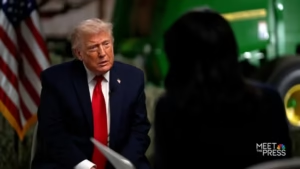
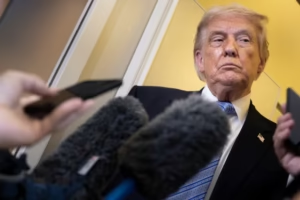
“Very possible we’ll make a deal,” Trump told reporters while discussing ongoing communications with Iran.
Despite the optimistic tone, the warning reinforced that military options remain on the table.
US-Iran Talks Show “Great Progress”
The latest diplomatic discussions between Washington and Tehran appear to have reduced tensions significantly. Trump confirmed the US has engaged in productive conversations with Iran over the previous 24 hours.
Iran has not officially responded publicly to the latest US proposal. However, Iran’s Foreign Ministry spokesperson confirmed diplomatic messages continue through Pakistan-mediated channels.
Why the Negotiations Matter
The negotiations are considered critical for several reasons:
- Preventing a wider Middle East war
- Protecting global oil supply chains
- Securing maritime routes in the Gulf region
- Reducing pressure on international energy markets
- Stabilizing relations between Gulf allies and Iran
According to regional sources, negotiators are reportedly working on a formal memo that could outline conditions for ending the conflict and reducing military activity.
Project Freedom and the Strait of Hormuz
One of the most important aspects of the crisis involves the Strait of Hormuz. Nearly one-fifth of the world’s oil passes through the narrow waterway.
What Is Project Freedom?
“Project Freedom” is the US military operation designed to guarantee secure maritime movement through the Strait of Hormuz after attacks on vessels increased in the region.
Trump paused the operation Tuesday night after what he described as substantial progress toward a “Complete and Final Agreement.”
Iran’s Islamic Revolutionary Guard Corps Navy later announced that safe passage through the Strait of Hormuz could continue under “new procedures.”
Strategic Importance of the Strait
Strait of Hormuz is one of the world’s most strategically significant waterways because:
- It connects the Persian Gulf to global markets
- Major oil exporters rely on it
- Disruptions can trigger global fuel price spikes
- International shipping routes depend on its stability
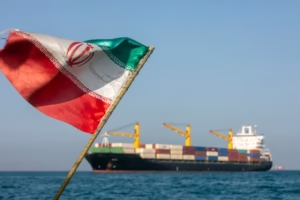
The US military also reportedly disabled an Iranian-flagged tanker in the Gulf of Oman after it attempted to move toward an Iranian port.
Iran’s Response to the US Proposal
Iran has remained cautious in public statements following Trump’s comments.
Officials in Tehran confirmed the country has not yet submitted a formal reply to Washington’s latest proposal. However, Iranian authorities acknowledged that diplomatic communication remains active.
Iran’s Current Position
Iran appears focused on several key objectives:
- Avoiding additional US military attacks
- Preserving regional influence
- Maintaining maritime access
- Preventing economic sanctions from expanding
- Securing guarantees against future military escalation
The Iranian government has also emphasized that negotiations must respect national sovereignty and regional security concerns.
Israel-Hezbollah Conflict Escalates
While negotiations continue between the US and Iran, regional tensions remain high elsewhere.
Israeli Prime Minister Benjamin Netanyahu confirmed that Israel targeted a senior Hezbollah commander in Beirut. The strike marked the first major attack in Lebanon since the ceasefire agreement.
Why Lebanon Matters
The Lebanon situation complicates peace efforts because Hezbollah is widely viewed as one of Iran’s closest regional allies.
Escalation in Lebanon could:
- Undermine diplomatic talks
- Trigger broader regional conflict
- Increase military pressure on Iran
- Disrupt ceasefire agreements
- Draw additional international involvement
Beirut remains a focal point for regional military and diplomatic developments.
Pakistan’s Role in Mediation
Pakistan has emerged as a key intermediary in the current negotiations between Washington and Tehran.
Why Pakistan Is Important
Pakistan maintains working relationships with both the United States and Iran, allowing it to facilitate communication during sensitive diplomatic moments.
Analysts believe Pakistan’s mediation has helped:
- Reduce immediate military tensions
- Establish indirect communication channels
- Encourage confidence-building measures
- Prevent accidental escalation
The diplomatic effort highlights Pakistan’s growing regional influence in conflict resolution.
Global Oil Markets and Regional Stability
Financial markets are closely monitoring the situation because the Middle East remains central to global energy supply.
Economic Concerns
If the conflict escalates:
- Oil prices could rise sharply
- Shipping insurance costs may increase
- Global inflation pressure could worsen
- Energy-importing nations may face economic challenges
However, signs of diplomatic progress have helped calm some market fears in recent days.
Investor Reactions
Energy analysts say traders are cautiously optimistic that negotiations may prevent a larger regional conflict. Still, uncertainty remains high because military operations could resume quickly if talks collapse.
What Happens Next? Trump threatens Iran strikes
Several major developments are expected in the coming days:
Possible Scenarios
1. Peace Agreement Reached
The US and Iran could finalize a memorandum ending the immediate crisis and reopening stable diplomatic communication.
2. Extended Negotiations
Both sides may continue indirect discussions through Pakistan while avoiding major military escalation.
3. Renewed Military Operations
If talks fail, Trump has indicated the US could return to stronger military action against Iranian targets.
Key Issues to Watch
- Iran’s formal response to the US proposal
- Future status of Project Freedom
- Security in the Strait of Hormuz
- Israel-Hezbollah military activity
- Global oil price movements
Conclusion
Trump threatens Iran strikes even as diplomatic negotiations appear to be making meaningful progress. The combination of military pressure and active diplomacy reflects the high-stakes nature of the current Middle East crisis.
With Pakistan mediating discussions and both sides reportedly moving closer to a possible agreement, the coming days could determine whether the region moves toward stability or renewed confrontation.
The Strait of Hormuz, Lebanon tensions, and ongoing US-Iran communications remain central to the rapidly evolving situation. Global markets, regional governments, and international observers are all watching closely as negotiations continue.
External (DoFollow) Links:
Explore more on CBS News: https://www.cbsnews.com/live-updates/iran-war-trump-progress-peace-deal-strait-of-hormuz/
Read further via CNN: https://edition.cnn.com/2026/05/06/world/live-news/iran-war-trump-strait-of-hormuz