Iran Seizes Ships in Strait of Hormuz: Shocking Crisis Update & Key Facts
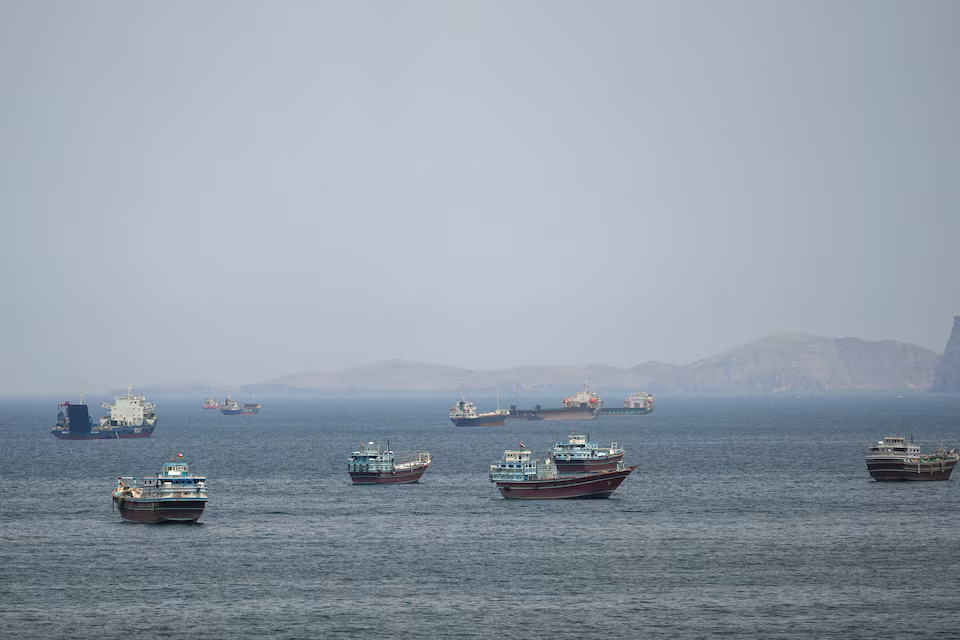
Ships and boats in the Strait of Hormuz, Musandam, Oman, April 22, 2026. REUTERS/Stringer
Iran seizes ships in Strait of Hormuz after Donald Trump extends ceasefire, escalating tensions in the Gulf. Discover key facts, global impact, and latest updates.
Iran Seizes Ships in Strait of Hormuz – Full Crisis Analysis
Iran Seizes Ships in Strait of Hormuz has once again pushed global tensions to a critical level after two cargo vessels were captured in one of the world’s most important oil transit routes. The incident comes just hours after Donald Trump announced the extension of the US-Iran ceasefire, creating a paradoxical mix of de-escalation and confrontation.
Overview of the Strait of Hormuz Crisis
The Iran Seizes Ships in Strait of Hormuz situation highlights the fragile stability in the Gulf region. The Strait of Hormuz handles nearly 20% of the world’s oil supply, making any disruption a global concern.
Tensions escalated after US forces reportedly intercepted Iranian-linked vessels, prompting a swift response from Tehran.
Amid the escalating tensions, the Iran Seizes Ships in Strait of Hormuz situation is also raising serious concerns among global powers like China and European Union, both of which rely heavily on stable energy supplies from the Gulf. Analysts warn that if the crisis continues unchecked, it could trigger wider international involvement, increase military presence in the region, and further destabilize already fragile diplomatic efforts. This growing uncertainty reinforces how the Strait of Hormuz remains one of the most dangerous geopolitical flashpoints in the world today.
What Happened: Ship Seizures Explained
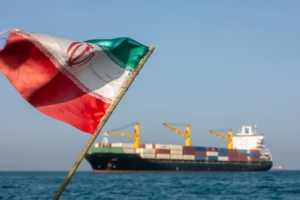
In a dramatic escalation, Iran’s Revolutionary Guard confirmed that it had seized two cargo ships and targeted a third vessel in the Strait.
- Two ships captured by Iranian forces
- One vessel reportedly attacked
- Action framed as retaliation for US naval operations
The Iran Seizes Ships in Strait of Hormuz incident underscores how quickly maritime tensions can spiral into broader conflict.
Trump’s Ceasefire Extension Strategy
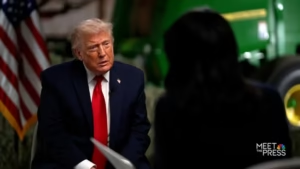
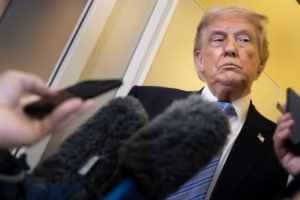
Despite the aggressive developments, Donald Trump extended the ceasefire indefinitely, stating that Iran needs time to present a “unified proposal.”
However, contradictions remain:
- US naval blockade continues
- No clear timeline for peace talks
- Military pressure remains active
This dual-track strategy—peace talks alongside pressure—adds complexity to the Iran Seizes Ships in Strait of Hormuz crisis.
Rising Regional Death Toll
The humanitarian impact continues to grow:
- Nearly 3,400 deaths in Iran
- Over 2,200 in Lebanon
- Casualties reported in Gulf states, Israel, and among US troops
These numbers show that beyond geopolitics, the Iran Seizes Ships in Strait of Hormuz crisis is deeply human.
Impact on Global Oil & Trade
The Strait of Hormuz is a lifeline for global energy markets. Any disruption can:
- Spike oil prices
- Disrupt global supply chains
- Increase shipping insurance costs
According to International Energy Agency, even minor instability in the region can affect economies worldwide.
Iran’s Position and Response
Iranian leadership has strongly criticized the US:
- President Masoud Pezeshkian called the blockade a “breach of commitments”
- Mohammad Bagher Ghalibaf stated reopening the Strait is “not possible” under current conditions
Iran insists that the Iran Seizes Ships in Strait of Hormuz move is a defensive response rather than escalation.
Future of US-Iran Peace Talks
Peace talks remain uncertain:
- Planned negotiations in Pakistan delayed
- Diplomatic trust at a low point
- US sees ship seizures as non-violation of ceasefire
Vice President JD Vance was expected to lead discussions, but timelines are unclear.
Conclusion
The Iran Seizes Ships in Strait of Hormuz crisis reflects the volatile balance between diplomacy and military pressure in the Middle East. While ceasefire extensions suggest a willingness for peace, actions on the ground tell a different story.
Unless both sides align on clear commitments, the Strait of Hormuz will remain a flashpoint capable of triggering global consequences.
External Resource (DoFollow):
Read more at BBC: https://www.bbc.com/news/live/cx297218m9vt
Follow further on CNN: https://edition.cnn.com/2026/04/22/world/live-news/iran-war-us-trump-blockade-ceasefire