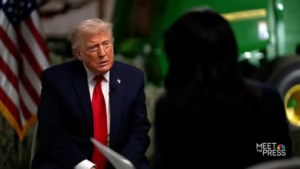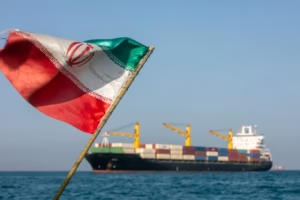
Trump Hormuz Strait Announcement: Powerful Moves to Protect Global Oil Markets
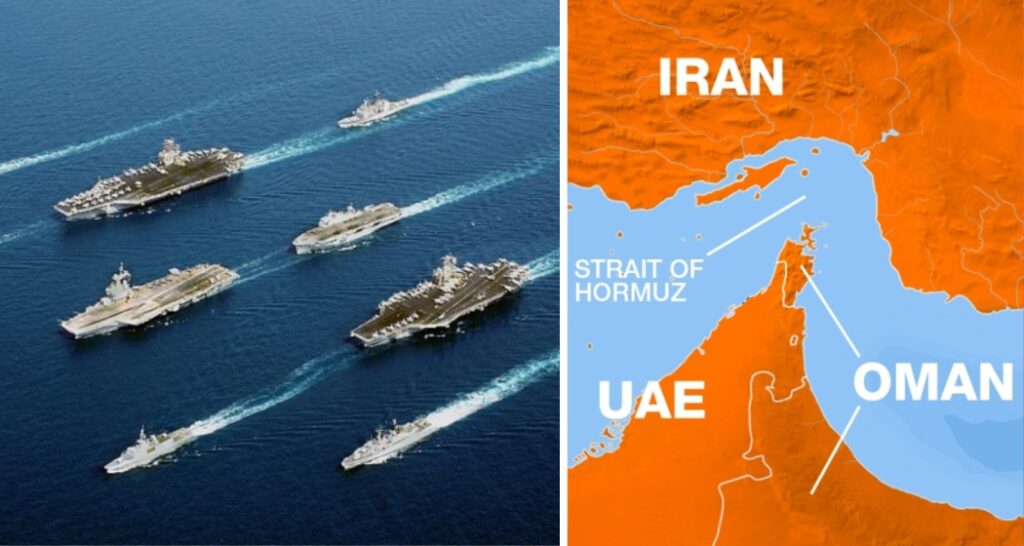
Trump US-Navy Escort Hormuz Strait Announcement/Map
Trump Hormuz Strait Announcement sparks global market reaction as President Donald Trump unveils 7 powerful steps to protect oil shipping, escort tankers, and stabilize crude prices amid escalating U.S.-Iran tensions.
Trump Hormuz Strait Announcement Shakes Global Markets
Trump Hormuz Strait Announcement dominated global headlines as President Donald Trump declared that the United States would take decisive action to protect commercial shipping in the Strait of Hormuz following escalating tensions with Iran.
The strategic waterway — responsible for nearly one-fifth of global crude oil transport — became the epicenter of financial and geopolitical anxiety after Iran reportedly restricted traffic amid ongoing conflict with the United States and Israel.
Markets initially reacted sharply. Oil prices surged above $85 per barrel, equities tumbled worldwide, and investors rushed to safe-haven assets like gold. However, sentiment improved after Trump confirmed the U.S. Navy would escort tankers and provide insurance coverage for shipping companies operating in the Gulf.
Why the Strait of Hormuz Matters
The Strait of Hormuz is one of the world’s most vital maritime chokepoints. Roughly 20% of global oil supplies pass through this narrow passage connecting the Persian Gulf to the Arabian Sea.
Any disruption here can:
- Spike global oil prices
- Trigger inflation worldwide
- Disrupt supply chains
- Increase geopolitical tensions
According to the U.S. Energy Information Administration, the strait handles millions of barrels per day, making it central to global energy security.
Market Reaction to the Crisis
Before the Trump Hormuz Strait Announcement, markets were rattled:
- Brent crude topped $85 per barrel
- European indices fell over 3%
- Asian markets posted heavy losses
- Gold futures surged
The benchmark S&P 500 dropped sharply early in the session before trimming losses.
European markets suffered even more. London fell 2.8%, while Frankfurt and Paris dropped over 3%, reflecting inflation fears and energy shock concerns.
Trump’s 7 Powerful Safeguard Measures
The Trump Hormuz Strait Announcement outlined decisive steps:
1️⃣ U.S. Navy Escort Missions
The U.S. Navy will escort oil tankers through the Strait to ensure safe passage.
2️⃣ Insurance Backing for Shipping
Washington will provide financial insurance coverage for Gulf shipping routes.
3️⃣ Military Presence Reinforcement
Expanded naval deployment in the Gulf region.
4️⃣ Direct Warning to Iran
Clear message: The U.S. will ensure free flow of global energy.
5️⃣ Coordination With Allies
Strategic alignment with Israel and Gulf partners.
6️⃣ Emergency Economic Preparedness
Measures to buffer domestic fuel supply disruptions.
7️⃣ Ongoing Monitoring and Further Actions
Trump stated “more actions to come.”
These steps helped cool oil prices by the end of trading.
Oil Prices Surge — Then Retreat
Crude prices initially soared amid fears of a prolonged closure.
However, Brent crude ultimately finished at $81.40 per barrel — up 4.7% but well below intraday highs.
Analysts warned that a full shutdown of the Strait could push oil toward $100 per barrel.
Higher oil prices typically:
- Raise transportation costs
- Increase consumer fuel prices
- Pressure central banks
- Slow economic growth
Impact on Global Stock Markets
The Trump Hormuz Strait Announcement helped limit equity damage.
The S&P 500 closed down 0.9% at 6,816.63 — over 100 points above earlier session lows.
European markets struggled more intensely:
- London -2.8%
- Frankfurt -3%
- Paris -3%
Investors feared prolonged conflict could spark:
- Energy inflation
- Slower growth
- Supply chain disruptions
Gold — a safe-haven asset — initially rose before reversing gains.
U.S.-Iran War Expands
The broader U.S.-Iran conflict entered its fourth day, with six U.S. service members reportedly killed, according to U.S. Central Command.
The situation intensified after:
- U.S. and Israeli strikes on Iranian targets
- Iran threatening Gulf shipping
- Drone attacks disrupting regional infrastructure
The conflict has also impacted cloud infrastructure. Amazon Web Services confirmed data centers in the Middle East were knocked offline due to drone strikes.
Tech Infrastructure Under Threat
The Middle East hosts critical global digital infrastructure.
Drone attacks reportedly disrupted multiple data centers operated by Amazon Web Services.
Potential risks include:
- Service outages
- Financial transaction delays
- Corporate downtime
- Increased cybersecurity concerns
The digital economy’s vulnerability adds another layer to the geopolitical crisis.
Inflation and Energy Shock Concerns
Energy prices directly influence global inflation.
European data already showed unexpected eurozone core inflation increases, compounding fears that oil volatility could:
- Force central banks to delay rate cuts
- Raise borrowing costs
- Weaken consumer spending
Energy shocks historically precede recessions when prolonged.
What Happens Next?
The Trump Hormuz Strait Announcement may have temporarily stabilized markets, but risks remain elevated.
Key scenarios:
- Full reopening of the Strait → Oil stabilizes
- Prolonged disruption → Oil above $100
- Regional escalation → Global recession risks
Investors, governments, and energy companies will monitor:
- Naval escort effectiveness
- Iran’s next moves
- Oil inventory levels
- Inflation data
Final Takeaway
The Trump Hormuz Strait Announcement marked a decisive attempt to stabilize global energy markets amid escalating conflict. While oil prices remain elevated, swift U.S. naval action and insurance guarantees helped ease immediate fears of a catastrophic supply shock.
Whether this intervention prevents a deeper crisis depends on how tensions unfold in the coming days.
Global markets remain on alert.
(DoFollow) Resources:
Read more at CBS 19 News: https://www.cbs19news.com/us-stocks-cut-losses-after-trump-announces-steps-to-safeguard-hormuz-strait/article_cc9237d7-20da-52f9-b68a-2803bdd09827.html
Further more on CNBC: https://www.cnbc.com/2026/03/03/us-iran-war-live-updates.html