US Pilot Rescued in Iran: Stunning Facts About the Daring 48-Hour Mission
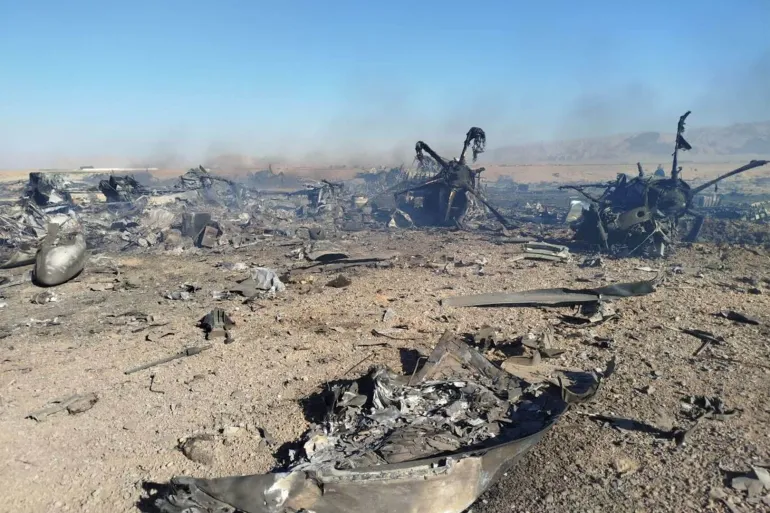
This photo provided by Iran's Revolutionary Guard Corps (IRGC) official website Sepah News on April 5, 2026 reportedly shows the wreckage and remains of targeted and crashed aircraft in central Iran. The IRGC said a US aircraft that had been searching for the missing crew member had been destroyed, Iranian media reported on April 5 [Handout/Sepah News via AFP]
US pilot rescued in Iran after a daring 48-hour combat search and rescue mission. Discover how U.S. special forces, CIA operatives, and advanced tracking tools pulled off one of the most dangerous rescues in modern military history.
US Pilot Rescued in Iran – Inside the Daring 48-Hour Mission
The US pilot rescued in Iran became one of the most dramatic events of the ongoing conflict, marking the first time in more than 20 years that a U.S. fighter jet was shot down in hostile territory. What followed was a massive, high-risk combat search and rescue (CSAR) operation involving:
- Special Operations Forces
- CIA operatives
- Dozens of military aircraft
- Real-time satellite tracking
- A presidentially directed rescue strategy
After 48 hours behind enemy lines, hunted by Iranian forces, the downed airman—a colonel—was finally rescued in what President Donald Trump called “one of the most daring Search and Rescue Operations in U.S. history.”
US Pilot Rescued in Iran: How the F-15E Was Shot Down
The crisis began when a U.S. Air Force F-15E Strike Eagle was shot down over southern Iran. Iranian officials claimed their air-defense system brought down the aircraft.
Both crew members successfully ejected, but they landed far apart in rugged terrain.
- One airman was rescued quickly.
- The second became stranded deep in hostile territory.
This triggered one of the most urgent rescue operations in decades.
The 48-Hour Search for a US Pilot Rescued in Iran
As soon as the crash was confirmed, U.S. intelligence and special operations forces launched a massive search effort.
According to multiple sources, including CBS News, the search was:
- “Huge” in scale
- Conducted in treacherous mountainous terrain
- Supported by night operations
- Coordinated directly from the White House Situation Room
Trump even halted other operations in Iran to concentrate all resources on the rescue.
CIA’s Secret Deception Campaign to Aid the Rescue
Before U.S. forces reached the airman, the CIA conducted a disinformation operation inside Iran.
They planted false intelligence claiming:
“The airman was already rescued and was being moved on the ground to an extraction point.”
This confusion slowed Iranian search teams and bought precious time.
Meanwhile, the CIA used:
- Satellite tracking
- Signals intelligence (SIGINT)
- Ground-level intelligence sources
They ultimately pinpointed the pilot hiding inside a mountain crevice, injured but alive.
Combat Search and Rescue (CSAR): The Most Dangerous U.S. Mission
Combat search and rescue missions are incredibly rare because:
- Helicopters must fly low over enemy territory
- Crews risk surface-to-air missiles
- Enemy patrols can quickly overwhelm rescuers
- Operations often occur at night to reduce detection
Retired Admiral William Fallon noted:
“Darkness is better for our forces. They’re trained to fight at night.”
This mission required:
- Stealth helicopters
- Electronic warfare aircraft
- Aerial refueling tankers
- Drones providing surveillance
- A U.S. Marine Quick Reaction Force
Two American aircraft were damaged during the mission and had to be destroyed on the ground to prevent Iranian capture.
Heavy Firefight as US Forces Closed In
The rescue team expected a quick extraction, but instead, the mission turned into a violent firefight.
According to Al Jazeera:
“What was meant to be a ‘get-in, get-out’ mission turned into a heavy firefight as enemy forces closed in.”
Key details:
- The firefight forced the mission into broad daylight.
- Iranian forces were closing in from multiple directions.
- The airman suffered injuries during both the ejection and the subsequent gun battle.
Still, U.S. special operations forces were able to secure the pilot and evacuate him.
Trump’s Command: “We Got Him!”
President Trump monitored the rescue for hours and personally approved several escalations.
He later posted:
“WE GOT HIM! The United States Military pulled off one of the most daring Search and Rescue Operations in U.S. History.”
He ordered:
- Dozens of aircraft armed with “lethal weapons”
- 24/7 real-time tracking
- Priority clearance for CSAR forces
- Total silence from the White House to avoid jeopardizing the mission
Trump also gave Iran a 48-hour ultimatum to reopen the Strait of Hormuz, adding additional tension.
Extraction, Evacuation & Medical Condition
Once secured, the airman was:
- Airlifted out of Iran
- Taken to a secure medical facility
- Treated for “serious but survivable injuries”
Trump later said:
“He will be just fine.”
The successful rescue avoided a catastrophic scenario—an American pilot becoming a prisoner of war inside Iran.
Why the US Pilot Rescued in Iran Mission Matters
This rescue is historic because:
- It’s the first U.S. fighter jet shot down in over 20 years.
- It involved one of the largest joint military-intelligence rescue missions ever attempted.
- It prevented a POW crisis.
- It showcased advanced American CSAR capabilities.
- It demonstrated coordination between CIA, Pentagon, and White House.
Conclusion
The dramatic story of the US pilot rescued in Iran highlights the extraordinary risks that American service members and rescue teams face in the line of duty. Supported by high-level intelligence, presidential intervention, and daring action by special operations forces, the mission became a defining moment in modern U.S. military operations.
It will be studied for years as an example of elite coordination, advanced technology, and unwavering commitment to saving American lives.
External (DoFollow) Links:
Follow more on BBC: https://www.bbc.com/news/articles/cm2k1dgz142o
Read more at CNN: https://edition.cnn.com/2026/04/05/politics/american-airman-rescue-mission-trump-iran
Further follow via Al Jazeera: https://www.aljazeera.com/news/2026/4/5/us-pilot-from-downed-f-15-plane-rescued-in-iran-what-we-know