Iran Ceasefire Denial: Shocking Facts Fueling Global Tensions in 2026
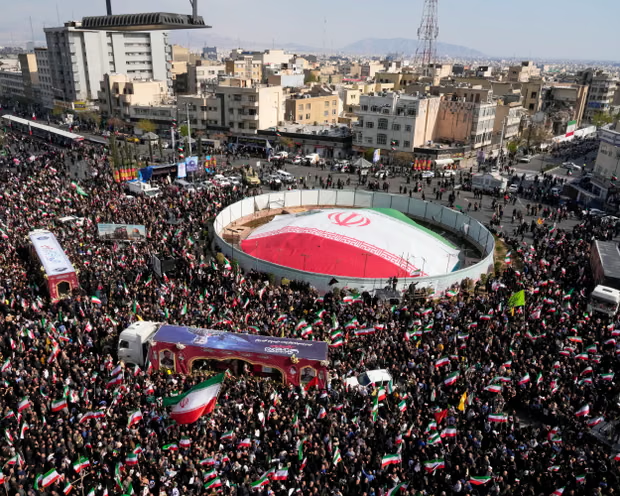
Mourners gather during a funeral procession for Alireza Tangsiri, head of Iran’s Islamic Revolutionary Guard Corps Navy Photograph: Vahid Salemi/AP
Iran ceasefire denial has intensified global tensions as Tehran rejects Donald Trump’s claims of requesting a truce. Discover the latest updates, diplomatic reactions, military implications, and geopolitical consequences in this detailed analysis.
Iran Ceasefire Denial
Iran ceasefire denial has become the center of global geopolitical attention after Tehran publicly rejected U.S. President Donald Trump’s claim that Iran requested a ceasefire. As the U.S.–Iran conflict enters its fifth week, both sides continue to push narratives that influence global markets, international alliances, and regional stability.
In this article, we break down everything you need to know — from Trump’s statements to Iran’s rebuttal, NATO concerns, and the economic fallout shaking global energy markets.
Background: What Sparked the Iran–US War?
The conflict escalated nearly a month ago when the United States and Israel launched coordinated strikes on Iranian military and nuclear infrastructure. While Washington claimed an imminent threat, no evidence was publicly presented.
Key events leading to the war:
- Failed diplomatic negotiations over uranium enrichment
- Breakdown of February nuclear talks
- Rising tensions in the Strait of Hormuz
- Accusations of Iranian aggression in the Gulf
The crisis has since caused soaring fuel prices, shipping disruptions, and fears of a prolonged Middle Eastern conflict.
Iran Ceasefire Denial vs Trump’s Claims
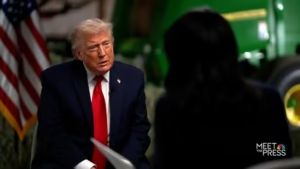
In a fiery Truth Social post, Trump claimed:
“Iran’s New Regime President… has just asked the United States of America for a CEASEFIRE!”
However, Iran’s Foreign Ministry swiftly responded via state media, calling Trump’s claim:
- “False”
- “Baseless”
- “A projection of Washington’s internal confusion”
Iran insists no ceasefire request was made, asserting that the country will not negotiate under military pressure.
This denial has intensified uncertainty surrounding the conflict’s trajectory.
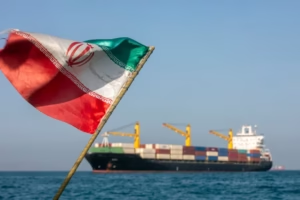
Iran Ceasefire Denial and Hormuz Strait Tensions
Trump stated the U.S. would only consider a ceasefire “when Hormuz Strait is open, free, and clear” — a critical chokepoint through which 20% of global oil passes.
Tehran has not formally blocked the waterway but has used military presence to signal its leverage.
Why Hormuz Matters:
- Controls global oil flow
- A single incident can spike fuel prices
- Naval escalation risks direct US–Iran confrontation
The denial signals Tehran’s refusal to appear weak during negotiations over such a strategic zone.
Trump Signals Withdrawal “With or Without Deal”
Trump made his most assertive statement yet:
“We’ll leave whether we have a deal or not. It’s irrelevant.”
He estimated a withdrawal within “two or three weeks”, raising uncertainty about the U.S.’s long-term objectives.
Analysts believe Trump is:
- Pressuring Iran into talks
- Appeasing domestic concerns over rising prices
- Attempting to cap military spending before elections
However, critics argue that rushing an exit could leave a power vacuum similar to Afghanistan in 2021.
Rising Oil Prices and Global Economic Impact
Brent crude reached $118.35 per barrel, its highest since the war began.
Global markets are reacting to:
- Instability around Hormuz
- Fear of Iranian retaliation
- Uncertainty over U.S. strategy
Economic Consequences:
- Shipping insurance premiums have surged
- Airline ticket prices increased due to fuel costs
- Developing countries face inflation spikes
- Energy-importing nations like Japan and India issue emergency statements
NATO Crisis Deepens After Trump’s Threats
Trump warned he is “absolutely” considering a withdrawal from NATO, citing lack of allied support in the Middle East.
A former U.S. ambassador described the situation as the “worst crisis in NATO’s 77-year history.”
Why this matters:
- The U.S. is NATO’s backbone
- A withdrawal could embolden Russia and China
- European allies remain divided on Middle East involvement
A U.S. exit is legally complicated due to a 2023 congressional act restricting unilateral withdrawal.
Iran’s Political Strategy Behind the Denial
Iran’s leadership denies the ceasefire request for several strategic reasons:
1. Preserve Domestic Strength
Admitting a request could weaken public confidence.
2. Maintain Negotiating Leverage
The Strait of Hormuz is Tehran’s strongest bargaining chip.
3. Avoid Appearing Weak to Regional Rivals
Saudi Arabia, UAE, and Israel closely monitor Iran’s public diplomacy.
4. Show U.S. Isolation
Iran wants to paint the U.S. as internationally unsupported — especially after NATO fractures.
Conclusion
The Iran ceasefire denial marks a pivotal moment in the rapidly evolving U.S.–Iran conflict. With Trump signaling a possible unilateral withdrawal, global oil prices surging, and NATO facing unprecedented strain, the world watches anxiously for the next move.
Whether the war ends in negotiations or through force, the consequences will reshape geopolitics, energy markets, and diplomatic alliances for years to come.
External (DoFollow):
Follow it on BBC: https://www.bbc.com/news/live/c36r5p1l7w3t
Read further at The Guardian: https://www.theguardian.com/world/middle-east-live/live/2026/apr/01/iran-live-updates-trump-claims-war-will-end-rubio-nato-relationship