Iran Halts Strikes on Neighbours Amid Explosive Trump Threat
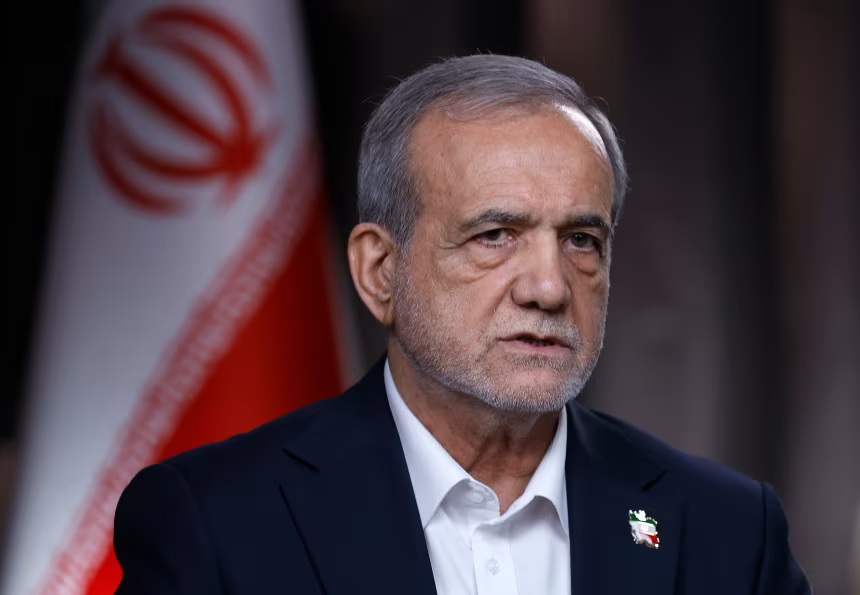
Iranian President Masoud Pezeshkian pictured while in New York City in September 2025. John Lamparski/Getty Images
Iran Halts Strikes on Neighbours as President Masoud Pezeshkian signals possible de-escalation in the Gulf conflict while warning that attacks from US bases will trigger retaliation.
Iran Halts Strikes on Neighbours: A New Phase in the Gulf Conflict
Iran Halts Strikes on Neighbours after President Masoud Pezeshkian announced that Tehran will stop targeting nearby countries unless attacks against Iran originate from their territories. The announcement comes as the war involving Iran, the United States, and Israel enters its second week and tensions remain extremely high across the Gulf region.
Arab states hosting US military bases had recently been targeted in retaliatory strikes by Iran. However, Tehran’s leadership now appears to be signaling a potential shift toward de-escalation while maintaining a firm warning: any attack launched from neighbouring territories will trigger a strong response.
The situation remains volatile, with statements from both Washington and Tehran suggesting the conflict could either escalate or move toward diplomatic engagement.
Iran Halts Strikes on Neighbours Announcement
Decision by Iranian Leadership
The declaration that Iran Halts Strikes on Neighbours was reportedly approved by Iran’s interim leadership council. According to statements carried by Iranian media, the move aims to reduce tensions with Gulf countries that host US military facilities.
President Pezeshkian emphasized that Iran does not seek conflict with its neighbors but will defend itself if attacks originate from their territory.
This policy adjustment could potentially reduce the risk of a wider regional war involving multiple Gulf nations.
Why Iran Targeted Gulf States Earlier
Retaliatory Strategy
Before announcing that Iran Halts Strikes on Neighbours, Iranian forces had targeted several countries believed to host American military assets.
These strikes were part of Iran’s retaliation against military operations carried out by the United States and Israel.
Several Gulf countries house important US bases, including:
- United Arab Emirates
- Qatar
- Bahrain
- Kuwait
Iran considers these installations potential launch points for attacks against its territory.
Pezeshkian’s Apology to Neighbouring Countries
Diplomatic Tone from Tehran
As part of the announcement that Iran Halts Strikes on Neighbours, President Pezeshkian also issued a rare apology to nearby countries affected by Iranian missile and drone operations.
The president acknowledged that recent attacks caused panic in parts of the Gulf region that previously felt safe from the conflict.
He stressed that Iran respects international law and humanitarian frameworks, rejecting demands for unconditional surrender from Washington.
This diplomatic message may be aimed at preventing Gulf states from becoming direct participants in the conflict.
US Response and Escalation Threats
Trump’s Strong Warning
While Iran signaled possible restraint, Donald Trump issued a warning suggesting further escalation.
The US president stated on social media that Iran would be “hit very hard,” hinting that additional targets were under consideration.
Trump also claimed that US forces had destroyed dozens of Iranian warships during the first days of the conflict.
However, these claims remain difficult to independently verify.
The evolving situation continues to raise concerns among analysts who fear the conflict could widen across the Middle East.
Continued Missile Launches Raise Questions
Contradictory Developments
Despite the announcement that Iran Halts Strikes on Neighbours, reports indicate that Iranian forces launched missiles and drones shortly after the speech.
One of the largest attacks involved:
- 16 ballistic missiles
- 121 drones
The United Arab Emirates was reportedly among the primary targets during these operations.
These developments have created confusion about whether the halt in attacks has actually taken effect or whether the military actions were planned earlier.
Role of US Military Bases in the Gulf
Strategic Importance
Iran’s decision that Iran Halts Strikes on Neighbours comes with a clear condition: Gulf states must not allow their territory to be used for attacks against Iran.
The region hosts several key US installations that support operations in the Middle East.
Examples include:
- Al Udeid Air Base in Qatar
- Naval Support Activity Bahrain
- Al Dhafra Air Base in the UAE
Iran warned that any aggression launched from these bases would receive a “decisive response.”
Impact on Regional Stability
Mixed Signals Across the Gulf
The announcement that Iran Halts Strikes on Neighbours initially brought relief to many Gulf governments and citizens.
However, the continued launch of projectiles shortly afterward suggests that tensions remain extremely high.
Regional analysts say the situation could evolve in several ways:
- Diplomatic talks leading to de-escalation
- Limited military exchanges continuing
- A wider regional conflict
The outcome will depend on decisions made by Washington, Tehran, and their allies in the coming days.
What Could Happen Next
Possible Scenarios
The policy shift where Iran Halts Strikes on Neighbours may represent a strategic pause rather than a complete ceasefire.
Several potential developments are now being closely watched:
- Whether Gulf states limit US military operations from their territory
- Whether the United States expands bombing campaigns
- Whether diplomatic channels reopen between Iran and Western powers
The next phase of the conflict could determine the long-term security balance in the Middle East.
Resources (DoFollow):
For more information on US Iran War
Read at CNN: https://edition.cnn.com/2026/03/07/middleeast/iran-pezeshkian-message-analysis-intl
Learn more about Iran Halts strikes at Al Jazeera: https://www.aljazeera.com/news/2026/3/7/iran-to-halt-strikes-on-neighbours-unless-attacks-from-there-pezeshkian