EU Solidarity with Spain: Powerful Reasons Europe Stands United Against Trump’s Trade Threats
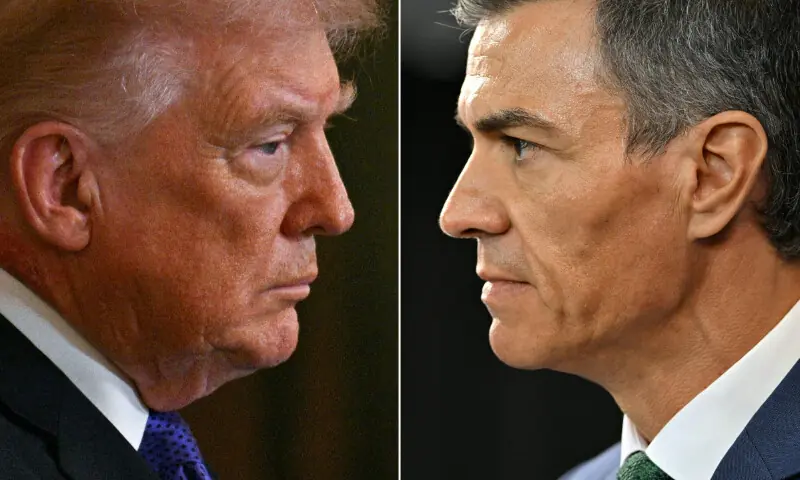
This combination of file pictures created on March 4, 2026 shows US President Donald Trump (L) waiting to speak during a Medal of Honor ceremony in the East Room of the White House on March 2, 2026, in Washington, DC and Spanish Prime Minister Pedro Sanchez. — AFP
EU Solidarity with Spain strengthens as European leaders unite against Trump’s trade threats over Iran strikes. Discover 7 powerful reasons Europe is standing firm.
EU Solidarity with Spain Takes Center Stage
EU Solidarity with Spain became the defining political message across Europe after U.S. President Donald Trump threatened to cut trade ties with Madrid. The diplomatic row erupted after Spanish Prime Minister Pedro Sánchez refused to allow jointly operated U.S.-Spanish air bases to be used in strikes against Iran.
The dispute has triggered an unprecedented wave of unity across the European Union, with top leaders insisting that any threat to one member state is a threat to all.
EU Solidarity with Spain: What Happened?
Tensions escalated after Spain blocked the use of its military bases for U.S. strikes targeting Iran. The White House responded sharply.
Standing alongside German Chancellor Friedrich Merz, Trump criticized Spain and threatened to cut trade ties entirely.
The situation immediately raised alarms across Brussels.
European Council President Antonio Costa spoke directly with Sánchez, reaffirming that the EU would protect Spain’s interests.
Trump’s Trade Threats Explained
During a White House press conference, Trump declared:
“We’re going to cut off all trade with Spain. We don’t want anything to do with Spain.”
The comments followed Spain’s refusal to participate in military operations related to the Middle East conflict.
Trade between the United States and Spain is deeply interconnected through the broader EU–U.S. trade framework. According to the European Commission’s official trade portal.
EU Solidarity with Spain and Sánchez’s “No to War” Stand
In a televised address, Sánchez described the escalating conflict as a “disaster.”
He warned:
“We cannot play Russian roulette with the fate of millions.”
Drawing comparisons to the Iraq War, Sánchez emphasized:
“No to war.”
Spain’s stance reflects its long-standing diplomatic tradition of multilateralism and conflict prevention.
Macron Expresses European Unity
French President Emmanuel Macron quickly expressed solidarity.
His office condemned “recent threats of economic coercion” targeting Spain.
France framed the dispute not as a bilateral issue, but as a broader challenge to European sovereignty.
European Commission: Ready to Defend EU Interests
EU Internal Market Commissioner Stéphane Séjourné declared:
“Any threat against a member state is a threat against the EU.”
Commission spokesperson Olof Gill added that Brussels stands ready to act through its common trade policy.
The European Commission emphasized the importance of predictable transatlantic trade relations.
Germany’s Position Sparks Controversy
Madrid also expressed disapproval over remarks made by Chancellor Merz at the White House, where he appeared not to defend Spain against criticism.
This moment raised questions about internal EU political coordination.
However, EU institutions quickly stepped in to reinforce unity.
Evacuations from the Middle East Continue
Amid escalating tensions, several European countries have launched evacuation and repatriation flights from the Middle East.
These operations use both commercial and military aircraft to ensure citizen safety.
The crisis underscores why EU Solidarity with Spain matters in the broader geopolitical landscape.
EU Manufacturing Strategy Amid Global Disruption
Separately, the European Commission unveiled a new industrial competitiveness plan to strengthen local manufacturing.
The strategy aims to:
- Reduce reliance on cheap Chinese imports
- Support decarbonization
- Introduce local content requirements
Interestingly, the framework leaves room for cooperation with non-EU countries like the UK.
What EU Solidarity with Spain Means for Transatlantic Relations
This dispute comes at a sensitive moment for global trade and security.
The EU and the U.S. concluded a major trade deal last year. Brussels now expects Washington to honor those commitments.
Key Implications:
- Strengthened EU unity
- Reinforced collective trade defense
- Heightened scrutiny of U.S.–EU relations
- Increased geopolitical independence for Europe
EU Solidarity with Spain signals that economic pressure tactics may backfire when directed at a unified bloc.
Conclusion: Europe Sends a Powerful Message
EU Solidarity with Spain has evolved from a diplomatic response into a defining moment for European unity.
Spain’s refusal to participate in military escalation sparked a trade confrontation. Yet instead of isolating Madrid, the threat galvanized Europe.
From Macron’s endorsement to Brussels’ firm stance, the message is clear:
Europe stands together.
As global tensions rise, EU Solidarity with Spain may shape the next chapter of transatlantic relations — and redefine how Europe responds to external pressure.
Resources (DoFollow):
Read details at The Guardian: https://www.theguardian.com/world/live/2026/mar/04/europe-latest-news-updates-pedro-sanchez-spain-nato-eu
Further more on NCBC: https://www.cnbc.com/2026/03/04/spain-pm-sanchez-trump-trade-nato-defense-iran-israel-crisis.html