OpenAI Pentagon AI Concerns: Sam Altman Warns on Military AI Risks
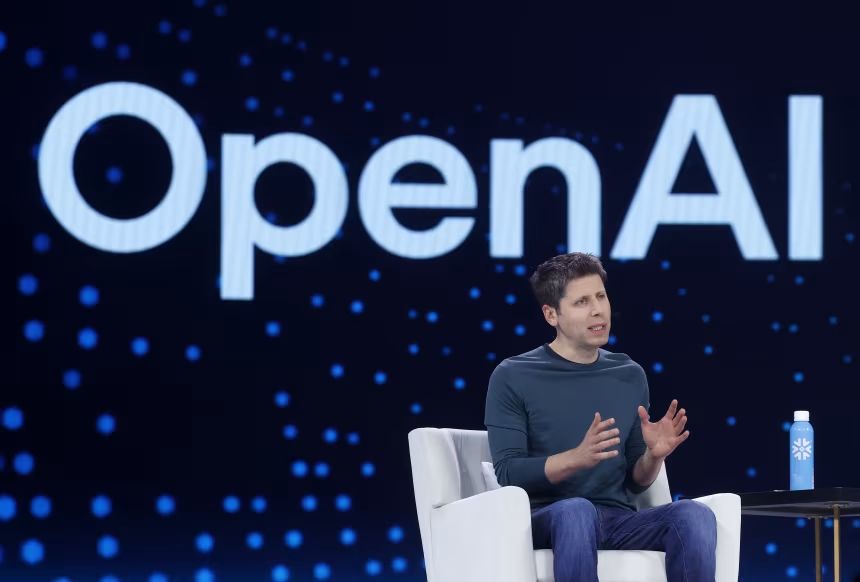
Open AI CEO Sam Altman speaks during Snowflake Summit 2025 at Moscone Center on June 2, 2025 in San Francisco, California. Justin Sullivan/Getty Images
OpenAI Pentagon AI Concerns take center stage as Sam Altman highlights risks around autonomous weapons, surveillance, and military AI safety in a growing Pentagon-Anthropic standoff.
OpenAI Pentagon AI Concerns: Industry Faces Military AI Turning Point
OpenAI Pentagon AI Concerns have emerged as a defining issue in the evolving relationship between artificial intelligence companies and military institutions. As governments race to adopt AI for defense and intelligence operations, tech leaders are increasingly cautious about how their models may be used on the battlefield or in surveillance programs.
Recent developments involving Sam Altman, OpenAI, and Anthropic highlight the tension between innovation, national security, and ethical responsibility. The debate intensified following reports that the Pentagon may pressure Anthropic to loosen its safety guardrails or risk losing a major contract.
OpenAI Pentagon AI Concerns Explained
At the heart of OpenAI Pentagon AI Concerns lies a shared industry stance: AI should not be deployed in ways that enable autonomous lethal weapons or mass surveillance of civilians. An OpenAI spokesperson confirmed that the company’s ethical boundaries align closely with Anthropic’s.
These guardrails reflect broader AI industry principles focused on human oversight, accountability, and preventing unintended consequences. While defense agencies view AI as a strategic advantage, AI developers remain wary of misuse.
Sam Altman’s Position on Military AI Collaboration
Sam Altman has emphasized that collaboration with defense agencies can be beneficial — provided strict legal and ethical protections are upheld. During an interview with CNBC, Altman noted that working with the Pentagon is acceptable if it respects “legal protections” and industry red lines.
Altman also expressed trust in Anthropic’s safety-first approach, highlighting that competition does not overshadow shared responsibility. His comments suggest growing industry unity around responsible military AI deployment.
The Pentagon and Anthropic Standoff
The OpenAI Pentagon AI Concerns gained urgency as Anthropic faced a deadline tied to its $200 million defense contract. The Pentagon reportedly requested broader AI usage permissions, including deployment across classified systems and lawful military applications.
Anthropic resisted removing internal safeguards, citing reliability concerns in high-risk scenarios such as lethal autonomy or population-scale surveillance. Failure to comply could lead to contract termination and possible designation as a supply chain risk.
This standoff reflects a deeper policy conflict: innovation speed versus ethical caution.
Autonomous Weapons and Surveillance Risks
Autonomous Weapons Debate
Autonomous weapons represent one of the most controversial aspects of AI in warfare. Critics warn that delegating lethal decisions to machines raises moral, legal, and accountability challenges.
Anthropic and OpenAI both stress that current AI systems remain too unreliable for fully autonomous combat operations.
Surveillance Concerns
Mass surveillance is another major factor behind OpenAI Pentagon AI Concerns. AI-powered analytics could theoretically monitor populations at unprecedented scale, prompting fears about civil liberties and democratic oversight.
Classified AI Systems and Security Debate
Anthropic’s Claude model was reportedly the first AI system used within classified military environments. The Pentagon’s interest in expanding such deployments underscores AI’s strategic value in intelligence analysis, logistics, and cyber defense.
Altman indicated OpenAI is exploring ways to allow classified usage while preserving safety guardrails — a compromise that could shape industry standards.
Industry-Wide Implications for AI Labs
OpenAI Pentagon AI Concerns extend beyond a single contract dispute. Altman described the situation as an industry-wide issue that may set precedent for future government-AI relationships.
Key implications include:
- Standardized military AI ethics policies
- Increased government oversight
- Competitive pressure among AI labs
- Potential geopolitical impact on AI leadership
The dispute may ultimately define how democratic governments collaborate with private AI innovators.
Regulatory Gaps in Military AI
A major driver behind OpenAI Pentagon AI Concerns is the lack of updated regulatory frameworks. Existing defense policies were not designed for rapidly evolving generative AI capabilities.
AI companies argue that clearer legislation is essential to:
- Define acceptable military AI use
- Establish accountability for AI decisions
- Protect civilian rights
- Encourage responsible innovation
Without regulatory clarity, tensions between defense priorities and ethical safeguards are likely to persist.
Potential Outcomes and Future Outlook
Several scenarios could emerge from the ongoing debate:
- Compromise Framework: AI companies and defense agencies agree on shared safeguards.
- Contract Realignment: Governments diversify AI partnerships to avoid reliance on a single vendor.
- Stricter AI Laws: Policymakers introduce new military AI regulations.
- Industry Collaboration: AI labs develop unified ethical standards.
Altman’s memo to staff suggests OpenAI aims to de-escalate tensions while ensuring that democratic governments retain authority over national security decisions.
Conclusion
OpenAI Pentagon AI Concerns underscore a pivotal moment in the evolution of military artificial intelligence. As governments pursue AI-driven defense capabilities, technology companies are grappling with ethical responsibilities and public trust.
The ongoing Pentagon-Anthropic standoff — and OpenAI’s effort to mediate — illustrates the delicate balance between national security and responsible innovation. How this conflict resolves could shape not only military AI policy but the future of global AI governance.
(DoFollow) Resources:
Read more at CNN: https://edition.cnn.com/2026/02/27/tech/openai-has-same-redlines-as-anthropic-in-any-deal-with-the-pentagon
Further more at WSJ: https://www.wsj.com/tech/ai/openais-sam-altman-calls-for-de-escalation-in-anthropic-showdown-with-hegseth-03ecbac8?mod=hp_lead_pos1