Kharg Island Strike: Dangerous Consequences for the Strait of Hormuz and Global Trade
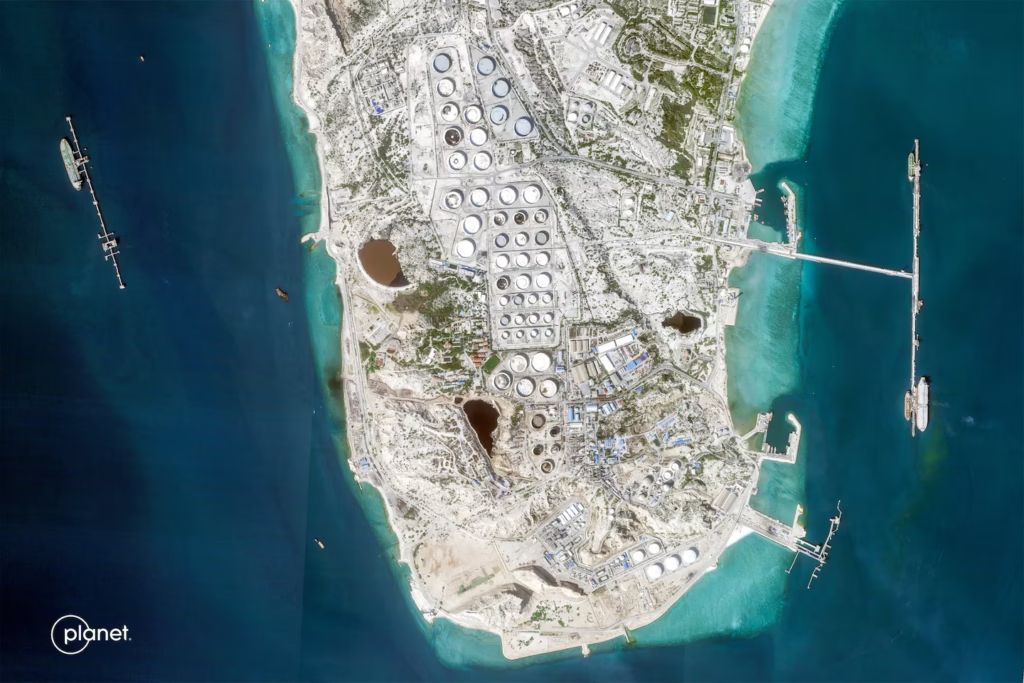
A satellite image of Iran’s Kharg Island, which hosts the country’s main crude export terminal, on Feb. 22. (Planet Labs PBC/AFP/Getty Images)
The Kharg Island Strike by former US President Donald Trump targeted Iran’s most strategic oil export hub. Discover why Kharg Island matters, how it impacts global oil trade, and what it means for tensions in the Persian Gulf.
What Is the Kharg Island Strike?
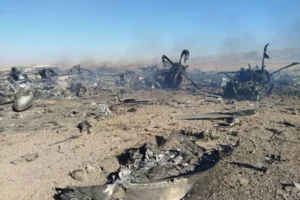
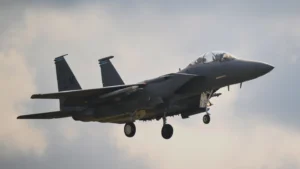
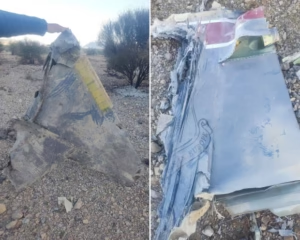
The Kharg Island Strike refers to a major military attack ordered by former US President Donald Trump targeting Iranian military infrastructure on Kharg Island, a critical oil export hub in the Persian Gulf.
According to statements from the United States Central Command, the operation destroyed more than 90 Iranian military targets, including missile facilities and logistical installations located on the island.
Trump claimed the attack had “totally obliterated” military positions while deliberately avoiding damage to the island’s oil infrastructure.
However, he warned that oil facilities could be targeted if Iran interfered with shipping in the Strait of Hormuz, one of the world’s most crucial maritime trade routes.
Why Kharg Island Matters to Iran
Iran’s Economic Lifeline
The Kharg Island Strike focused on a location widely described as Iran’s economic jugular vein.
Although the island is small—just about 15 nautical miles (24 km) off Iran’s coast—it plays an outsized role in the country’s energy economy.
Key facts about Kharg Island include:
- Nearly 90% of Iran’s crude oil exports pass through the island.
- Oil pipelines transport crude from mainland Iran directly to Kharg’s export terminals.
- Massive oil tankers load millions of barrels of crude for global markets.
The island’s deep waters allow super-tankers carrying up to 85 million gallons of oil to dock directly at its long jetties.
These shipments then travel through the Strait of Hormuz toward international buyers.
One of the biggest buyers of Iranian oil remains China.
For Iran, Kharg Island is not just infrastructure—it is a critical revenue engine.
Trump’s Military Decision Explained
The Kharg Island Strike appears to be part of a broader escalation in tensions between the United States and Iran.
Officials said the mission targeted military installations linked to the Islamic Revolutionary Guard Corps (IRGC).
The IRGC is considered a powerful military and economic force within Iran and has significant control over energy infrastructure revenues.
According to US military officials:
- The strike targeted missile storage facilities.
- Radar and air defense systems were destroyed.
- Command centers used by Iranian forces were eliminated.
By avoiding oil infrastructure, Washington attempted to send a strategic warning without triggering an immediate global energy crisis.
Kharg Island and the Strait of Hormuz
The World’s Most Important Oil Chokepoint
The Kharg Island Strike is deeply connected to tensions surrounding the Strait of Hormuz.
This narrow waterway connects the Persian Gulf to the Gulf of Oman and the Arabian Sea.
It is widely regarded as the most critical oil transit route in the world.
Important statistics include:
- Around 20% of global oil supply passes through the strait.
- Millions of barrels of crude oil travel through it daily.
- Major exporters include Saudi Arabia, Iran, and Iraq.
If Iran attempts to block shipping lanes, global oil prices could spike dramatically.
That is why the US has long maintained naval forces in the region.
Iran’s Response to the Kharg Island Strike
Iranian military leaders responded quickly to the Kharg Island Strike.
The Islamic Revolutionary Guard Corps warned that any attack on the island’s oil infrastructure would trigger severe retaliation.
Officials reportedly told United Arab Emirates authorities that US “hideouts” in the region could become legitimate targets.
At the same time, protests erupted in Tehran, where thousands rallied in defiance of US and Israeli attacks.
Reports from regional media outlets indicated large explosions were heard in central Tehran as tensions escalated.
Regional Conflict Escalates
The Kharg Island Strike is part of a broader conflict involving several actors across the Middle East.
According to regional reports:
- The war began on February 28.
- More than 1,450 people have been killed in Iran.
- Missile and drone attacks have targeted multiple Gulf locations.
Countries such as:
- Qatar
- Bahrain
have issued evacuation warnings amid fears of wider regional escalation.
Global Oil Market Implications
Energy analysts say the Kharg Island Strike could have enormous implications for global oil markets.
If Iran’s export capacity is disrupted, several consequences could follow:
Potential Global Effects
- Oil prices could surge worldwide.
- Shipping insurance costs may increase.
- Global supply chains could be disrupted.
Markets are particularly sensitive because Kharg Island handles the majority of Iran’s oil exports.
Any prolonged disruption could push prices significantly higher.
For further information on global oil supply routes, see resources from the International Energy Agency.
What Happens Next?
The future of the Kharg Island Strike crisis depends largely on whether the conflict escalates further.
Several scenarios remain possible:
Possible Outcomes
- Iran retaliates against US regional bases.
- Oil infrastructure becomes a direct target.
- The Strait of Hormuz faces temporary closure threats.
- Diplomatic intervention reduces tensions.
Global powers including the United Nations are likely to push for de-escalation.
However, military analysts warn that any direct attack on Kharg Island’s oil terminals could dramatically intensify the conflict.
Conclusion
The Kharg Island Strike highlights the fragile balance of power in the Persian Gulf.
While the US attack targeted military infrastructure, the location itself represents the heart of Iran’s oil economy.
By striking near Iran’s most critical energy hub without destroying its oil facilities, Washington appears to have sent a calculated strategic message.
But with regional tensions rising and threats of retaliation mounting, the situation remains volatile.
What happens next in the Persian Gulf could reshape global energy markets and geopolitical alliances for years to come.
(DoFollow) Resources:
For more at BBC: https://www.bbc.com/news/articles/c8jxzlwvd8ro
Read further on The Washington Post: https://www.washingtonpost.com/politics/2026/03/13/trump-us-iran-war-kharg-island-oil/