6 US Service Members Killed in Iran Attacks – Shocking War Escalation Explained
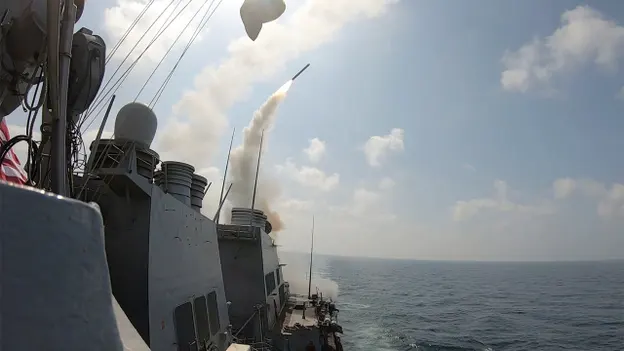
A U.S. Navy ship launches Tomahawk Land Attack Missiles in support of Operation Epic Fury. (U.S. Central Command Public Affairs)
6 US Service Members Killed in Iran Attacks as CENTCOM confirms casualties. Discover shocking updates, Trump’s response, Middle East escalation, oil market impact, and global reactions.
Latest Updates: US Service Members Killed in Iran Attacks
US Service Members Killed in Iran Attacks have officially been confirmed by United States Central Command (CENTCOM). As of 4 p.m. ET on March 2, six American troops have died as a result of Iran’s initial missile, drone, and aircraft assaults in the region.
According to CENTCOM, two previously unaccounted service members were recovered from a facility struck during the attacks. Earlier reports confirmed that one critically wounded soldier succumbed to injuries, bringing the total number of casualties to six.
The names of the fallen troops will be released 24 hours after notification of next of kin.
Major combat operations are ongoing, and U.S. officials warn that the situation may intensify further.
What CENTCOM Confirmed About the Casualties
United States Central Command stated that 18 U.S. troops have been seriously wounded during the early phase of Operation Epic Fury.
Chairman of the Joint Chiefs of Staff, Dan Caine, described the fallen troops as:
“The best that our nation has to offer… true examples of what selfless service means.”
The Pentagon emphasized that operations remain active across multiple theaters in the Middle East.
Trump’s Powerful Statement on the Iran Conflict
U.S. President Donald Trump said operations against Iran could last four to five weeks but warned he is prepared to extend them “far longer than that.”
Trump outlined four main objectives:
- Destroy Iran’s missile capabilities
- Eliminate naval threats
- Prevent Iran from acquiring nuclear weapons
- Cut support for allied militant groups such as Hezbollah
“This was our last, best chance to eliminate intolerable threats posed by this regime,” Trump said.
Regional Escalation: Israel, Hezbollah & Gulf States
The conflict has expanded rapidly.
- Israel and U.S. forces bombed Iranian missile sites and naval headquarters.
- Hezbollah launched missiles at Israel.
- Iranian-backed strikes reportedly killed 11 people in Israel.
- The Iranian Red Crescent Society claims at least 555 deaths inside Iran.
In Kuwait, chaos unfolded when local defenses mistakenly shot down three American F-15E Strike Eagles during active Iranian aerial assaults. Fortunately, all six pilots ejected safely.
Meanwhile, Qatar confirmed it shot down two Iranian Sukhoi Su-24 bombers.
Energy Crisis: Strait of Hormuz Under Threat
The Strait of Hormuz, through which nearly 20% of global oil passes, has become a flashpoint.
Multiple ships were attacked, and energy facilities were targeted:
- Saudi Arabia’s Ras Tanura refinery faced drone strikes.
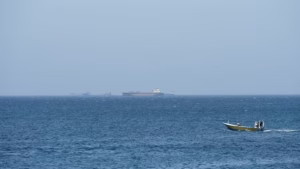
- An oil tanker in the Gulf of Oman was hit.
- Debris damaged infrastructure in Kuwait.
Qatar Energy halted LNG production, sending European gas prices up 40%. Energy analysts warn prolonged instability could trigger a global recession if oil exports remain disrupted.
Operation Epic Fury: What We Know
The military campaign, dubbed Operation Epic Fury, began early Saturday Eastern Time.
This operation marks one of the most aggressive U.S. military engagements in the region in recent years.
Defense Secretary and White House officials have cautioned that further casualties are possible as Iran continues retaliatory operations.
International Reaction and Diplomatic Fallout
Several countries have urged restraint.
In Washington, Rep. Tony Wied said:
“Our number one focus now should be the protection of our brave men and women in uniform.”
Meanwhile, senior Iranian official Ali Larijani declared on social media that Iran would not negotiate with the United States.
Diplomatic channels appear frozen, raising fears of a prolonged regional war.
Economic Shockwaves Across Global Markets
World markets reacted sharply:
- Oil prices surged
- Natural gas prices jumped 40% in Europe
- Shipping routes faced disruption
- Insurance costs for tankers spiked
The Gulf region, responsible for a major share of global energy supply, remains unstable.
What Happens Next?
The confirmation of US Service Members Killed in Iran Attacks marks a significant turning point in the conflict.
Military officials warn that escalation remains likely if missile and drone strikes continue.
President Trump maintains that the objective is to neutralize threats swiftly — but regional dynamics suggest a longer and more complex engagement.
The coming weeks will determine whether diplomatic pressure can de-escalate tensions or if broader regional war becomes unavoidable.
Final Thoughts
The tragic deaths of six American troops highlight the severe human cost of the escalating Iran conflict. As operations continue under Operation Epic Fury, global leaders face mounting pressure to prevent a broader regional war.
The world watches closely as tensions rise across the Middle East.
Resources (DoFollow):
Read more on WBAY: https://www.wbay.com/2026/03/02/trump-says-iran-operations-are-likely-last-4-5-weeks-could-go-longer/
Explore more about this on KATV: https://katv.com/news/nation-world/fourth-us-service-member-dies-of-wounds-from-irans-initial-attacks-centcom-central-command-military-president-donald-trump-operation-epic-fury-killed-in-action-airstrikes
Further more at CNBC: https://www.cnbc.com/2026/03/02/us-iran-live-updates-trump-oil-gold.html