Strait of Hormuz Crisis 2026: Shocking Iran Warning Could Disrupt Global Oil Supply
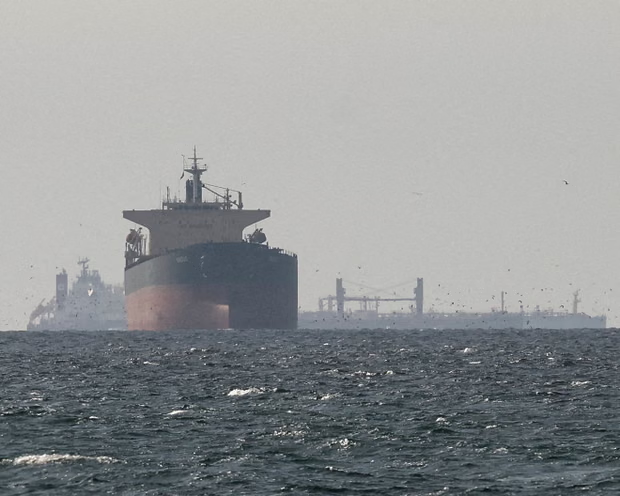
Cargo ships in the Gulf, near the Strait of Hormuz, as Iran claims the crucial channel is open to all except ‘enemy’ ships Photograph: Reuters
Strait of Hormuz Crisis 2026 intensifies as Iran threatens to close the vital oil route if the U.S. attacks its infrastructure. Explore global risks, oil impact, and Middle East tensions.
Strait of Hormuz Crisis 2026: A Dangerous Turning Point
Strait of Hormuz Crisis 2026 has emerged as one of the most dangerous geopolitical flashpoints in recent history. Rising tensions between Iran and the United States are threatening global energy security and regional stability.
Iran has issued a strong warning that it will completely shut down the Strait of Hormuz if its energy infrastructure is attacked, escalating fears of a broader conflict in the Middle East.
What is the Strait of Hormuz?
The Strait of Hormuz is one of the world’s most critical oil chokepoints. Around 20% of global oil supply passes through this narrow waterway.
A closure would have devastating consequences for global markets, affecting countries from Asia to Europe.
Strait of Hormuz Crisis 2026: Latest Developments
The Strait of Hormuz Crisis 2026 escalated after the U.S. issued an ultimatum demanding Iran reopen shipping routes within 48 hours.
In response, Iran’s Islamic Revolutionary Guard Corps (IRGC) released a statement warning of complete closure if threats against its infrastructure continue.
Iran’s Warning and IRGC Statement
Iran’s military leadership has made it clear:
- Any attack on Iranian power plants will trigger retaliation
- U.S.-linked companies could face destruction
- Energy facilities in countries hosting U.S. bases may become targets
Iran emphasized it does not seek war but will defend its sovereignty at all costs.
U.S. Response and Trump’s Threat
Former U.S. President Donald Trump has warned that failure to reopen the Strait could lead to direct strikes on Iranian infrastructure.
American officials argue that Iran cannot be allowed to:
- Control global oil flow
- Threaten international economies
- Disrupt maritime trade routes
Regional Escalation and Israel Factor
The Strait of Hormuz Crisis 2026 is further complicated by rising tensions involving Israel.
Recent developments include:
- Iranian missile strikes near key Israeli zones
- Increased Israeli military operations in Lebanon
- Escalation against Hezbollah forces
These developments signal a potential multi-front conflict in the region.
Global Oil Supply at Risk
The Strait of Hormuz is vital for oil exports from:
- Saudi Arabia
- UAE
- Kuwait
- Iraq
If the Strait closes:
- Oil prices could skyrocket beyond $150 per barrel
- Global inflation may surge
- Supply chains could collapse
Impact on Middle East Civilians
The Strait of Hormuz Crisis 2026 is not just about geopolitics—it directly affects millions of civilians.
Potential risks include:
- Destruction of power plants
- Water shortages due to desalination disruption
- Mass displacement and humanitarian crisis
Reports indicate over 2,000 casualties already in the ongoing conflict.
What Happens If the Strait Closes?
If Iran follows through:
Immediate Effects
- Oil tankers halted
- Naval confrontations increase
- Insurance costs for shipping spike
Long-Term Effects
- Global recession risk
- Energy crisis in Asia and Europe
- Strategic military escalation
Expert Analysis & Global Reaction
Global analysts warn that the Strait of Hormuz Crisis 2026 could:
- Trigger a wider Middle East war
- Involve NATO allies
- Lead to economic instability worldwide
Countries are urging diplomatic solutions to avoid catastrophe.
7 Shocking Global Risks of Strait of Hormuz Crisis 2026
1. Oil Price Explosion
Prices could surge beyond $150–$200 per barrel, affecting every economy worldwide.
2. Global Inflation Crisis
Fuel price increases would drive up costs of goods, transportation, and food.
3. Supply Chain Collapse
Shipping disruptions could delay global trade and manufacturing.
4. Financial Market Instability
Stock markets could crash due to uncertainty and investor panic.
5. Military Escalation
Naval clashes in the Persian Gulf could trigger a full-scale war.
6. Humanitarian Crisis
Millions could face shortages of water, electricity, and food.
7. Energy Security Breakdown
Countries heavily dependent on Gulf oil would face severe shortages.
Conclusion
The Strait of Hormuz Crisis 2026 represents a critical moment in global politics. With both Iran and the United States standing firm, the risk of escalation remains dangerously high.
Diplomatic intervention is essential to prevent:
- Economic collapse
- Regional war
- Humanitarian disaster
The world now watches closely as this crisis unfolds.
Resources (DoFollow):
Follow more on TNYT: https://www.nytimes.com/live/2026/03/22/world/iran-war-oil-trump
Read further at The Guardian: https://www.theguardian.com/world/live/2026/mar/22/middle-east-crisis-live-iran-war-trump-ultimatum-major-attack-strait-of-hormuz-open-israel-hit-tehran-retaliation