Shocking Strait of Hormuz Attacks: Oil Prices Could Explode to $200 Amid Iran Threat

Smoke rises from the Thai bulk carrier Mayuree Naree near the Strait of Hormuz after an attack on March 11, 2026 [AFP]
Strait of Hormuz attacks escalate as three ships are hit near the key oil route. Iran threatens to block the waterway, raising fears that oil prices could surge to $200 per barrel.
Strait of Hormuz Attacks: Global Oil Markets on Edge After Three Ships Are Hit
Strait of Hormuz attacks are rapidly escalating tensions across the Middle East as three commercial ships were struck near the strategic waterway that carries roughly 20% of the world’s oil supply. The incidents come as Iran threatens to block the critical maritime route entirely, warning that “not a litre of oil” will pass through the strait during the ongoing regional conflict.
The situation has sent shockwaves through global energy markets, raising fears of a severe supply disruption and a dramatic surge in oil prices that analysts say could reach $200 per barrel.
Strait of Hormuz Attacks Raise Global Alarm
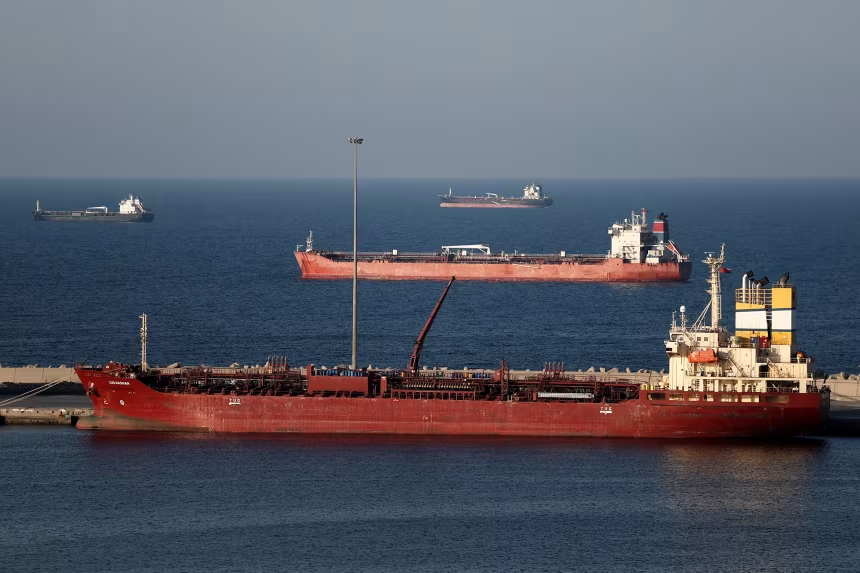
The latest Strait of Hormuz attacks occurred Wednesday morning when three vessels were reportedly struck by projectiles near the narrow shipping corridor connecting the Persian Gulf to the Gulf of Oman.
According to monitoring reports from the UK Maritime Trade Operations, the ships were hit near the entrance of the waterway, sparking immediate concerns about the safety of global oil shipments.
Sources told international media that Iran may have begun deploying naval mines in the region, although this claim remains disputed.
The waterway is one of the world’s most sensitive energy chokepoints, making the Strait of Hormuz attacks particularly alarming for global trade and oil markets.
Why the Strait of Hormuz Is So Important
The Strait of Hormuz is widely considered the most critical oil shipping route on the planet.
Every day, millions of barrels of crude oil pass through the narrow passage linking Gulf oil producers to global markets.
Major exporters using the route include:
- Saudi Arabia
- Iraq
- Kuwait
- United Arab Emirates
- Qatar
According to the International Energy Agency, nearly one-fifth of the world’s oil consumption travels through the strait.
Because of this dependency, even minor disruptions can send oil markets into turmoil.
Three Ships Hit Near the Waterway
Wednesday’s Strait of Hormuz attacks targeted three commercial vessels navigating the strategic corridor.
The ships were struck by projectiles, though initial reports suggest the vessels were able to remain afloat. Maritime authorities quickly issued warnings for shipping companies operating in the region.
Defense officials indicated that the attacks could signal a new phase in the escalating maritime conflict, particularly as Iran seeks leverage against ongoing military pressure.
The United States has so far declined to provide naval escorts to civilian ships traveling through the strait until the security situation stabilizes.
Iran’s Threat to Stop Oil Flow
Iran’s powerful military organization, the Islamic Revolutionary Guard Corps (IRGC), issued a stark warning during the crisis.
A spokesperson from the IRGC’s Khatam al-Anbiya headquarters said:
“Not a litre of oil will pass through the Strait of Hormuz.”
The statement followed the recent Strait of Hormuz attacks, signaling Iran’s readiness to block the waterway entirely.
The IRGC warned that ships connected to the United States, Israel, or allied countries could become legitimate targets.
The warning also included a prediction that oil prices could skyrocket.
“Expect oil at $200 per barrel,” the spokesperson said.
Oil Markets React to the Strait of Hormuz Attacks
The Strait of Hormuz attacks have already triggered volatility in energy markets.
Oil prices surged sharply earlier this week before fluctuating amid uncertainty over the conflict’s duration.
Energy analysts warn that if the waterway closes even temporarily, global oil supplies could face a severe shock.
According to energy analysts cited by major financial outlets, prices could rise dramatically if shipments are blocked.
Military Tensions Escalate Across the Region
The maritime attacks come as wider military tensions escalate across the Middle East.
Donald Trump said at a rally that the United States had “won” in Iran, though he did not provide evidence to support the claim.
Meanwhile, Israel announced it launched a large-scale wave of airstrikes on suburbs of Beirut after rocket attacks from the militant group Hezbollah.
The escalation highlights how the Strait of Hormuz attacks are part of a broader regional conflict involving multiple actors.
Strategic Oil Reserves Released Worldwide
In response to the growing crisis, the International Energy Agency announced plans to release 400 million barrels of oil from global reserves.
This would mark the largest coordinated reserve release in history.
The United States is also considering tapping into its Strategic Petroleum Reserve to stabilize markets.
These measures aim to offset supply disruptions caused by the Strait of Hormuz attacks and prevent severe economic consequences.
What Happens If the Strait Closes?
Experts warn that a full closure of the strait could have devastating global consequences.
Possible outcomes include:
- Massive oil price spikes
- Supply shortages in major economies
- Global inflation increases
- Shipping disruptions across Asia and Europe
The Strait of Hormuz attacks have therefore become a major geopolitical risk that could affect everything from transportation costs to electricity prices worldwide.
Global Economic Impact
If the crisis continues, economists predict the Strait of Hormuz attacks could trigger a new global energy shock similar to past oil crises.
Major economies including:
- China
- India
- Japan
- European Union nations
are heavily dependent on Gulf oil shipments.
A prolonged disruption could slow economic growth and increase inflation across multiple regions.
Conclusion
The recent Strait of Hormuz attacks represent one of the most serious threats to global energy security in recent years.
With three ships struck near the critical waterway and Iran warning that it may block oil shipments entirely, the stakes are extremely high.
As military tensions rise and energy markets react, the world is watching closely to see whether diplomatic efforts can prevent a full-scale disruption to one of the planet’s most vital shipping routes.
If the conflict escalates further, the consequences could ripple far beyond the Middle East — affecting oil prices, global trade, and the broader world economy.
DoFollow links
Follow on CNN: https://edition.cnn.com/world/live-news/iran-war-us-israel-trump-03-11-26
Read more at Al Jazeera: https://www.aljazeera.com/news/2026/3/11/irans-irgc-says-not-one-litre-of-oil-will-get-through-strait-of-hormuz