Historic Power Shift: Iran Names Mojtaba Khamenei Supreme Leader Amid War Crisis
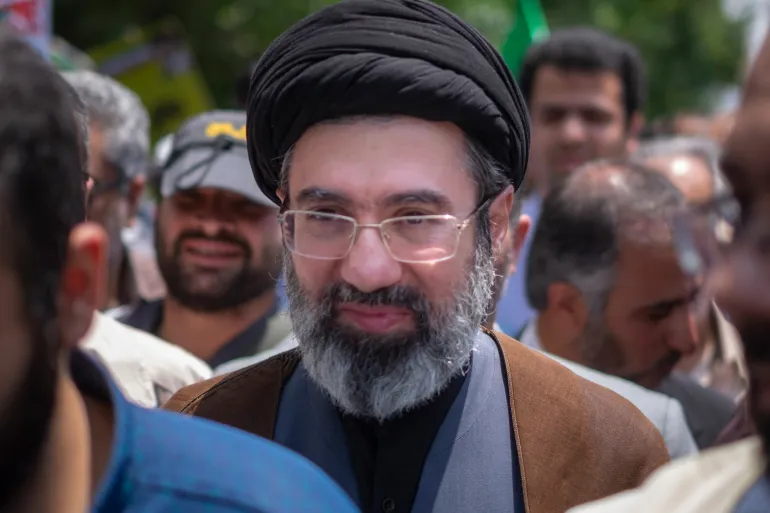
Son of Iran's slain Supreme Leader Ayatollah Ali Khamenei, Mojtaba Khamenei, attends a demonstration to mark Jerusalem day in Tehran. [File: Morteza Nikoubazl/NurPhoto via Getty Images]
Iran appoints Mojtaba Khamenei as Supreme Leader after the killing of his father Ali Khamenei. The leadership change comes as the Middle East war intensifies and global tensions rise.
Iran Appoints Mojtaba Khamenei as Supreme Leader After Father’s Killing
Mojtaba Khamenei Supreme Leader became one of the most searched global topics after Iran confirmed that Mojtaba Khamenei has been selected as the country’s new supreme leader following the killing of his father, Ali Khamenei.
Iranian state media reported that senior clerics approved Mojtaba’s leadership after an emergency meeting of the Assembly of Experts, the institution responsible for choosing the supreme leader.
The decision comes amid an expanding regional conflict that has pushed the Middle East into one of its most volatile periods in decades.
Iran’s Leadership Crisis
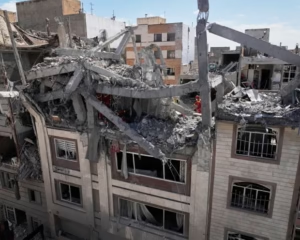
The rise of Mojtaba Khamenei Supreme Leader follows the assassination of Ali Khamenei in a United States–Israeli strike on Tehran in late February.
Ali Khamenei ruled Iran for 37 years, becoming one of the most powerful political and religious figures in the Middle East. He succeeded Ruhollah Khomeini, the leader of the Iranian Revolution.
His death triggered immediate political uncertainty inside Iran while tensions between Tehran, Washington, and Tel Aviv intensified.
Iranian leaders quickly moved to maintain stability by selecting Mojtaba Khamenei as the new supreme leader.
Who Is Mojtaba Khamenei?
A Powerful Figure Behind the Scenes
Although Mojtaba Khamenei never held public office, analysts say he has been influential within Iran’s political and security establishment for years.
His close ties to the Islamic Revolutionary Guard Corps (IRGC) helped him build strong support among Iran’s powerful security networks.
Experts at the Council on Foreign Relations have previously described Mojtaba as a key power broker inside the Iranian leadership circle.
His selection signals that Iran’s leadership may continue a hardline political strategy during the current regional conflict.
How Iran Selects a Supreme Leader
The Assembly of Experts, consisting of 88 clerics, holds the constitutional authority to appoint Iran’s supreme leader.
Following Ali Khamenei’s death, the body reportedly reached a majority agreement to appoint Mojtaba.
One member reportedly stated:
“The path of Imam Khomeini and the martyr Imam Khamenei will continue.”
The statement suggests the Iranian leadership intends to preserve the ideological direction of the Islamic Republic despite the ongoing war.
War Escalates Across the Middle East
The emergence of Mojtaba Khamenei Supreme Leader occurs as the conflict between Iran and its adversaries expands across the region.
The Israel Defense Forces warned that any successor to Ali Khamenei could become a potential target.
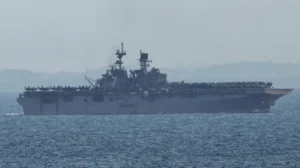
Meanwhile, the United States has increased its military presence across the Gulf.
The United States Central Command confirmed that an American service member died from injuries sustained during Iranian missile attacks earlier in the conflict.
The death marks the seventh U.S. casualty since hostilities began.
Controversial School Strike
Another major development in the war involves an airstrike near an Iranian elementary school.
New video evidence suggests the strike targeted a nearby naval base but caused devastating civilian casualties.
More than 160 students were reportedly killed, raising global outrage.
Human rights organizations such as Amnesty International have called for an independent investigation into the attack.
The Role of Iran’s Revolutionary Guard
Many analysts believe Mojtaba Khamenei’s leadership could strengthen the role of the IRGC in Iranian politics.
The organization controls significant military and economic power within Iran.
Because Mojtaba has close ties to the IRGC, observers expect a stronger military influence in national decision-making.
This may affect Iran’s approach toward diplomacy, sanctions negotiations, and regional security strategies.
Global Implications of the Leadership Change
The appointment of Mojtaba Khamenei Supreme Leader could reshape the geopolitical landscape of the Middle East.
Iranian officials have warned the conflict is entering a “new phase.”
Possible developments include:
- Attacks on regional energy infrastructure
- Increased naval tensions in the Strait of Hormuz
- Expanded proxy conflicts across the region
Energy analysts warn disruptions in the Strait of Hormuz could impact global oil markets.
Organizations such as International Energy Agency closely monitor developments in the region.
What Happens Next
Iran now faces one of the most challenging periods in its modern history.
Under Mojtaba Khamenei’s leadership, the country must navigate:
- An escalating regional war
- Economic sanctions
- Domestic political pressure
- International diplomatic isolation
Whether Iran moves toward further confrontation or negotiations may depend heavily on decisions made by the new supreme leader in the coming weeks.
Resources (DoFollow):
For more updates CNN: https://edition.cnn.com/world/live-news/iran-war-us-israel-trump-03-08-26
Further read at Al Jazeera: https://www.aljazeera.com/news/2026/3/8/iran-names-khameneis-son-as-new-supreme-leader-after-fathers-killing-2