Iran Supreme Leader Khamenei Death: Shocking Impacts on the Middle East
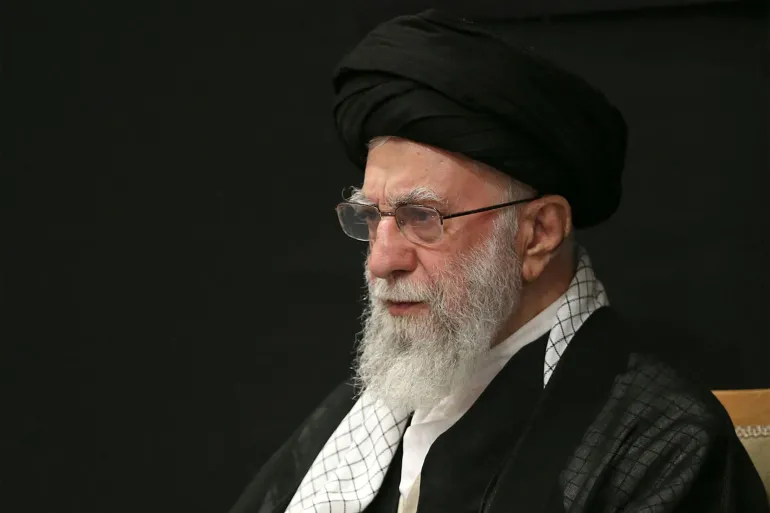
Ayatollah Ali Khamenei attending a mourning ceremony in Tehran marking the ninth day of the Islamic month of Muharram in the lead-up to Ashura, a 10-day period commemorating the seventh century killing of Prophet Mohammed's grandson Imam Hussein [File: Handout via AFP]
Iran Supreme Leader Khamenei Death shocks the world after a joint US-Israel strike. Discover 7 explosive facts, regional impact, political fallout, and what happens next in Iran.
Iran Supreme Leader Khamenei Death
Iran Supreme Leader Khamenei Death has sent shockwaves across the Middle East and the global political landscape. The reported killing of Ali Khamenei in a joint U.S.-Israeli airstrike marks one of the most dramatic geopolitical turning points in modern Iranian history.
Iranian state media confirmed early Sunday that the 86-year-old leader was killed during a targeted strike on his compound in Tehran. The announcement has raised urgent questions about the future of the Islamic Republic, regional stability, and the risk of wider war.
Overview of Iran Supreme Leader Khamenei Death
The Iran Supreme Leader Khamenei Death occurred during what officials described as a coordinated airstrike carried out by the United States and Israel. According to Iranian reports, the attack targeted Khamenei’s central compound in downtown Tehran.
Khamenei had ruled Iran since 1989, following the death of Ruhollah Khomeini. For over three decades, he shaped Iran’s military doctrine, foreign policy, and nuclear ambitions.
His death leaves Iran without its undisputed leader for the first time in more than 30 years.
How the Strike Happened
According to reports, advanced intelligence and tracking systems were used in the operation. Former U.S. President Donald Trump announced the death hours before Iranian state confirmation.
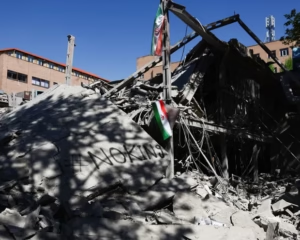
Satellite imagery reportedly showed heavy damage to the targeted compound. Iranian outlets described the attack as a “joint aggression” by the U.S. and Israel.
Donald Trump’s Reaction
Following the Iran Supreme Leader Khamenei Death, Trump described the moment as an opportunity for Iranians to “take back” their country.
He also warned that additional “heavy and pinpoint bombing” could continue if Iran retaliates.
Iran’s Immediate Response
Iran vowed swift retaliation. The powerful Islamic Revolutionary Guard Corps (IRGC) threatened what it called its “most intense offensive operation” yet.
The IRGC — formally known as Islamic Revolutionary Guard Corps — plays a central role in Iran’s security and regional influence.
A temporary governing council has reportedly been formed until a new supreme leader is selected.
The death has also led to nationwide mourning, with black flags raised at the sacred Imam Reza shrine in Mashhad.
Leadership Vacuum and Political Uncertainty
The Iran Supreme Leader Khamenei Death creates an unprecedented leadership vacuum. Under Iran’s constitution, the Assembly of Experts must appoint a successor.
However, no clear heir has been publicly identified.
Khamenei held final authority over:
- Military command
- Nuclear policy
- Judiciary oversight
- State broadcasting
- Foreign relations
His absence destabilizes both the clerical establishment and military power structure.
Regional and Global Implications
The Iran Supreme Leader Khamenei Death dramatically escalates tensions across the Middle East.
Possible Consequences:
- Increased military confrontation with Israel
- Attacks on U.S. bases in the region
- Oil market volatility
- Expanded regional proxy conflicts
- Nuclear negotiations collapse
Iran’s distrust of the West was deeply rooted in the Iran-Iraq War and Western backing of Saddam Hussein.
Security analyst Vali Nasr has long argued that Iran’s defense-first strategy was shaped by wartime trauma and isolation.
Ayatollah Khamenei: The Leader Who Shaped Iran’s Defiance
Before the Iran Supreme Leader Khamenei Death, he had led Iran for over three decades with a firm grip on both religious and military institutions.
Under his leadership:
- The IRGC expanded regionally
- Sanctions resistance strategies intensified
- Nuclear ambitions advanced
- Internal dissent was tightly controlled
He promoted a “resistance economy” to counter Western sanctions and prioritized self-reliance.
Public Reaction Inside Iran
Reports from Tehran described mixed reactions. Some residents reportedly celebrated, while others mourned.
The government declared:
- 40 days of national mourning
- A seven-day public holiday
- Nationwide memorial gatherings
This dual response highlights Iran’s internal divisions.
What Happens Next?
The future after the Iran Supreme Leader Khamenei Death remains uncertain.
Possible scenarios include:
- Hardline consolidation of power
- Internal elite power struggle
- Broader public unrest
- Escalation into regional conflict
- Renewed international negotiations
The coming weeks will determine whether this event triggers reform, retaliation, or regional war.
Final Thoughts
The Iran Supreme Leader Khamenei Death represents a historic turning point. Whether it leads to regime transformation, prolonged conflict, or diplomatic recalibration remains to be seen.
One thing is certain: the Middle East has entered a new and uncertain chapter.
Resource (DoFollow):
Read more on Al Jazeera: https://www.aljazeera.com/news/2026/2/28/ayatollah-ali-khamenei-the-leader-who-shaped-irans-defiance
Further more on CNN: https://edition.cnn.com/2026/03/01/middleeast/iran-israel-us-analysis-npw-int-hnk