Urgent Developments in the Iran Strait of Hormuz Mines Crisis That Could Shake Global Oil Markets
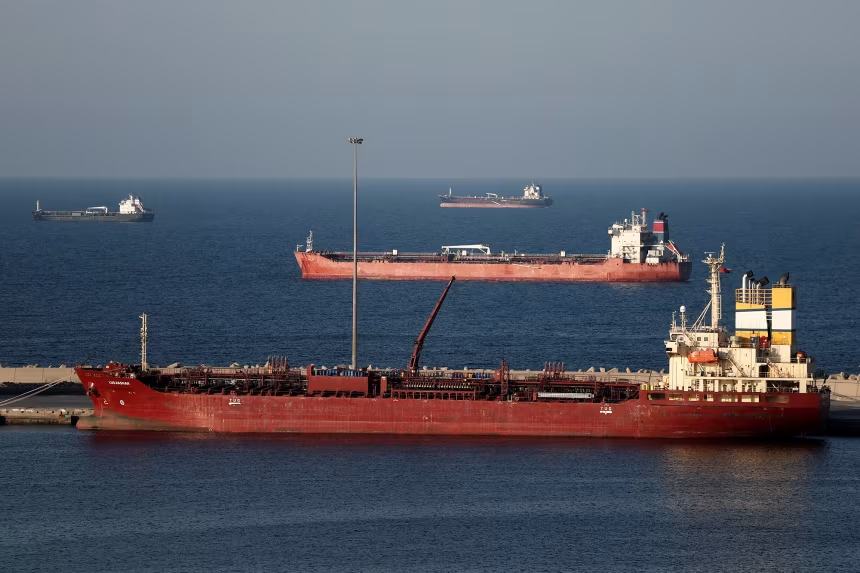
Luojiashan tanker sits anchored in Muscat, as Iran vows to close the Strait of Hormuz, amid the U.S.-Israeli conflict with Iran, in Muscat, Oman, March 7, 2026. REUTERS/Benoit Tessier Benoit Tessier/Reuters
Iran Strait of Hormuz mines crisis escalates as the US claims it destroyed Iranian mine-laying vessels. Discover key developments, global oil risks, and what could happen next.
Iran Strait of Hormuz Mines Crisis Escalates as US Warns of Severe Military Consequences
Iran Strait of Hormuz mines have become the latest flashpoint in the rapidly escalating Middle East crisis, with U.S. officials claiming that Iranian forces have begun laying naval mines in one of the world’s most strategically vital shipping lanes.
According to intelligence sources cited by multiple media outlets, Iran has reportedly deployed a number of mines in the Strait of Hormuz, a narrow waterway through which nearly 20% of global oil supplies pass every day.
The development has sparked immediate warnings from the United States, with former U.S. President Donald Trump stating that American forces have already destroyed several Iranian mine-laying vessels and would respond with overwhelming force if more mines appear in the region.
The situation threatens global energy markets and has raised fears of a broader military confrontation in the Middle East.
What Is the Iran Strait of Hormuz Mines Crisis?
The Iran Strait of Hormuz mines crisis began after intelligence reports suggested that Iranian forces were preparing to deploy naval mines to disrupt shipping in the strategic waterway.
The Islamic Revolutionary Guard Corps (IRGC), which operates alongside Iran’s conventional navy, reportedly possesses specialized vessels designed to rapidly deploy naval mines.
According to intelligence sources:
- Only a few dozen mines have reportedly been deployed so far.
- Iran retains 80–90% of its small naval craft, meaning it could deploy hundreds more if tensions escalate.
- The operation could be used as a strategic deterrent against Western military intervention.
These developments have intensified fears that the Strait could become a battleground.
Why the Strait of Hormuz Matters to Global Energy
The Strait of Hormuz is widely considered the most important energy chokepoint in the world.
Key facts about the Strait include:
- Around 20 million barrels of oil pass through daily.
- Nearly one-fifth of global petroleum supply moves through the route.
- Major exporters such as Saudi Arabia, United Arab Emirates, Kuwait, and Iraq rely on it.
If the Iran Strait of Hormuz mines situation escalates, global oil prices could surge dramatically due to disrupted shipments.
US Claims to Destroy Iranian Mine-Laying Boats
Amid the growing crisis, Donald Trump announced that U.S. forces had already destroyed several Iranian vessels suspected of laying mines.
According to his statement:
“The United States has completely destroyed 10 inactive mine-laying vessels.”
Trump warned Iran that any attempt to block the Strait would lead to unprecedented military consequences.
The U.S. Department of Defense later confirmed that United States Central Command (CENTCOM) had conducted operations targeting suspected mine-laying craft in the region.
Defense officials emphasized that the U.S. military would not allow the Strait of Hormuz to be held hostage.
Iran’s Military Capabilities in the Strait
Experts say Iran has spent decades developing strategies designed to control or disrupt traffic through the Strait of Hormuz.
These include:
Naval Mines
Relatively inexpensive but highly effective weapons capable of damaging large oil tankers.
Fast Attack Boats
Iran’s navy maintains hundreds of small, high-speed vessels that can deploy mines or launch missile attacks.
Coastal Missile Batteries
Shore-based anti-ship missiles positioned along Iran’s coastline.
Drone and Surveillance Systems
Used to track shipping and military movements.
The Islamic Revolutionary Guard Corps Navy has repeatedly warned that ships passing through the Strait during wartime could be targeted.
Global Oil Market and Shipping Risks
The Iran Strait of Hormuz mines situation could have severe economic consequences.
Possible impacts include:
1. Oil Price Spikes
Even limited disruption could send global oil prices soaring.
2. Insurance Costs for Ships
Shipping insurance rates could rise dramatically for vessels entering the Gulf.
3. Military Escort Operations
The U.S. Navy may begin escorting commercial vessels through the Strait.
4. Shipping Delays
Oil tankers might divert routes or wait outside the Gulf.
Shipping experts have described the Strait as a “death valley” due to the increasing risks associated with navigating the region during the crisis.
Possible Military Escalation Scenarios
Several possible outcomes could unfold depending on how the Iran Strait of Hormuz mines situation develops.
Limited Naval Clashes
Small-scale confrontations between Iranian forces and Western naval vessels.
Large-Scale Military Response
If commercial ships are damaged, the United States and allies could launch major operations.
Diplomatic De-Escalation
International pressure may push both sides toward negotiations.
Full Strait Closure
The worst-case scenario would involve Iran attempting to fully block the Strait.
Such an event could trigger a global energy crisis.
What Happens Next in the Hormuz Crisis?
The coming days will be critical in determining whether tensions escalate or ease.
Military analysts believe the most important factors include:
- Whether additional Iran Strait of Hormuz mines are deployed
- Whether commercial ships are attacked
- Whether diplomatic negotiations begin
For now, the Strait remains under intense surveillance by U.S. and allied naval forces.
Global markets, energy companies, and governments are watching closely as the crisis unfolds in one of the world’s most critical waterways.
Resources (DoFollow):
Read more at The Guardian: https://www.theguardian.com/world/live/2026/mar/10/iran-war-live-updates-iranian-supreme-leader-mojtaba-khamenei-middle-east-tehran-oil-prices-latest-news
Further more on CNN: https://edition.cnn.com/2026/03/10/politics/iran-begins-laying-mines-in-strait-of-hormuz