Breaking: Donald Trump Iran War Updates as US Rejects Deal
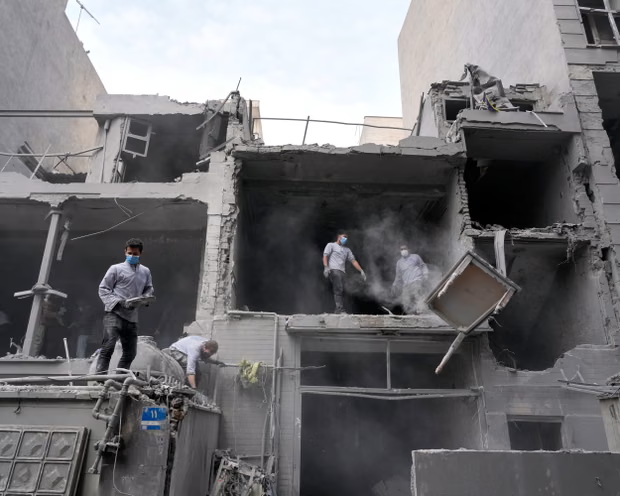
Volunteers remove debris from a residential building in Tehran on Sunday after it was damaged by a US-Israeli strike. Photograph: Vahid Salemi/AP
Donald Trump Iran War tensions rise as the US president says he is not ready to sign a ceasefire deal with Iran. The conflict threatens global oil supply, the Strait of Hormuz, and Middle East stability.
Donald Trump Iran War: Trump Says US Not Ready to Strike a Deal With Iran
Donald Trump Iran War tensions continue to intensify as the United States president said Washington is not prepared to sign a ceasefire agreement with Iran. According to the US leader, Tehran has shown interest in negotiations, but the proposed terms are not strong enough for the United States.
The statement came as fresh missile and drone attacks erupted across the Middle East while American and Israeli forces launched additional airstrikes on Iranian targets. The growing conflict has rattled global markets, disrupted shipping routes, and raised concerns about oil supply through the strategic Strait of Hormuz.
Analysts warn that if the Donald Trump Iran War continues to escalate, it could trigger a broader regional crisis and severe economic consequences worldwide.
Background of the Donald Trump Iran War
The Donald Trump Iran War began after joint military operations by the United States and Israel targeted Iranian military infrastructure. The strikes aimed to weaken Iran’s missile capabilities and disrupt its drone production.
In response, Iran launched missile and drone attacks against Israeli territory and American military facilities in the region. The exchange of strikes quickly escalated into one of the most dangerous confrontations in the Middle East in recent years.
Military analysts say the conflict has already resulted in thousands of casualties and severe damage to military infrastructure across several countries.
External analysis of the conflict can be found through organizations like
- Council on Foreign Relations
- International Crisis Group
Both organizations warn that prolonged fighting could destabilize global energy markets.
Trump Rejects Ceasefire Proposal
Speaking in an interview, Donald Trump said Iran had expressed interest in negotiating a deal but insisted the terms were not acceptable to Washington.
“Iran wants to make a deal, and I don’t want to make it because the terms aren’t good enough yet,” the president said.
According to Trump, any agreement would require Iran to completely abandon its nuclear ambitions. However, he declined to provide details about the conditions under which the United States would agree to negotiations.
Officials within the administration have sent mixed signals regarding the duration of the conflict, with some suggesting the war could end within weeks while others warn it may last longer.
US and Israeli Strikes on Iranian Targets
Military operations have intensified across Iranian territory. American and Israeli aircraft reportedly struck dozens of military facilities including missile depots, drone factories, and air defense installations.
The Israeli military claims it has targeted more than 200 strategic locations over a 24-hour period.
The strikes were reportedly aimed at reducing Iran’s ability to attack shipping routes and neighboring countries.
Meanwhile, Iran has launched retaliatory strikes using drones, ballistic missiles, and naval harassment tactics in the Persian Gulf.
Strategic Importance of the Strait of Hormuz
One of the most critical elements of the Donald Trump Iran War is the potential closure of the Strait of Hormuz.
The narrow waterway handles nearly 20% of the world’s oil shipments, making it one of the most important energy routes on the planet.
Trump has called on several countries to send warships to help keep the shipping corridor open.
Countries mentioned include:
- China
- France
- Japan
- South Korea
- United Kingdom
The US Navy is also considering escorting commercial oil tankers through the strait to prevent further disruption.
Experts warn that reopening the strait through military force alone could prove extremely difficult if Iran continues using mines, missiles, and small attack boats.
Kharg Island and Iran’s Oil Exports
Another critical target in the Donald Trump Iran War is Kharg Island.
Kharg Island handles the majority of Iran’s oil exports. American military officials confirmed that precision strikes targeted facilities on the island.
However, Trump later stated that the energy infrastructure itself was largely spared.
“We totally demolished Kharg Island,” Trump said, adding that additional strikes could occur if necessary.
Preserving energy pipelines, analysts say, may have been intended to avoid a complete collapse of global oil supply.
Global Economic Impact of the Conflict
The Donald Trump Iran War has already disrupted global trade routes and energy markets.
Key consequences include:
- Rising global oil prices
- Disruption of tanker shipping routes
- Airline flight rerouting across the Middle East
- Supply chain uncertainty
Economists warn the prolonged conflict could push the global economy toward recession if oil exports remain restricted.
More than 600 commercial vessels are reportedly trapped in the Red Sea as security concerns grow.
International Reaction and Diplomatic Efforts
World leaders have urged restraint as the conflict intensifies.
British Prime Minister Keir Starmer reportedly discussed the Strait of Hormuz crisis with Trump as part of diplomatic efforts to maintain open shipping routes.
Meanwhile Iran’s foreign minister signaled that Tehran might be willing to discuss maritime security arrangements with international partners.
However, neither Washington nor Tehran has softened its public rhetoric so far.
What Could Happen Next
Security experts say several scenarios could unfold in the coming weeks:
1. Escalation of Air and Naval Attacks
Both sides may intensify strikes on military infrastructure.
2. Limited Ceasefire Negotiations
Back-channel diplomacy could eventually lead to talks.
3. Global Naval Coalition
Multiple countries could deploy warships to protect shipping lanes.
4. Prolonged Regional Conflict
If diplomacy fails, the Donald Trump Iran War could turn into a long-term regional confrontation.
Conclusion
The Donald Trump Iran War represents one of the most volatile geopolitical crises in recent years. While Iran appears open to negotiating a ceasefire, Washington insists that stronger terms must be met before any deal can be reached.
With missile attacks continuing, oil shipments under threat, and international navies preparing to secure vital sea routes, the world is watching closely to see whether diplomacy or escalation will shape the next chapter of this conflict.
(DoFollow) Resources:
Read more on The Guardian: https://www.theguardian.com/world/2026/mar/15/us-israel-iran-war-donald-trump-ceasefire-deal-new-attacks
Further more at CNN: https://edition.cnn.com/world/live-news/iran-war-us-israel-trump-03-15-26